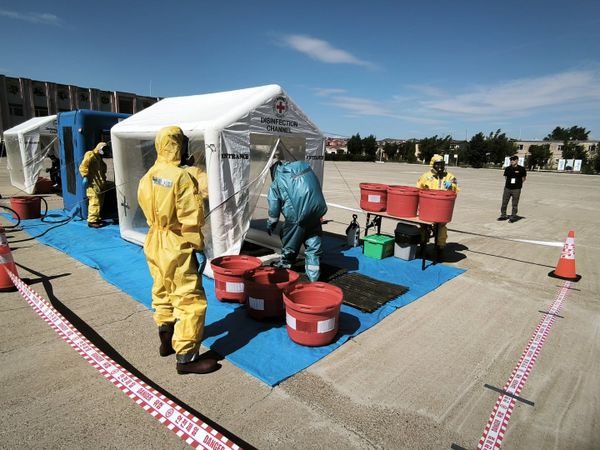
British CBRN response specialists share expertise with European delegates during study visit

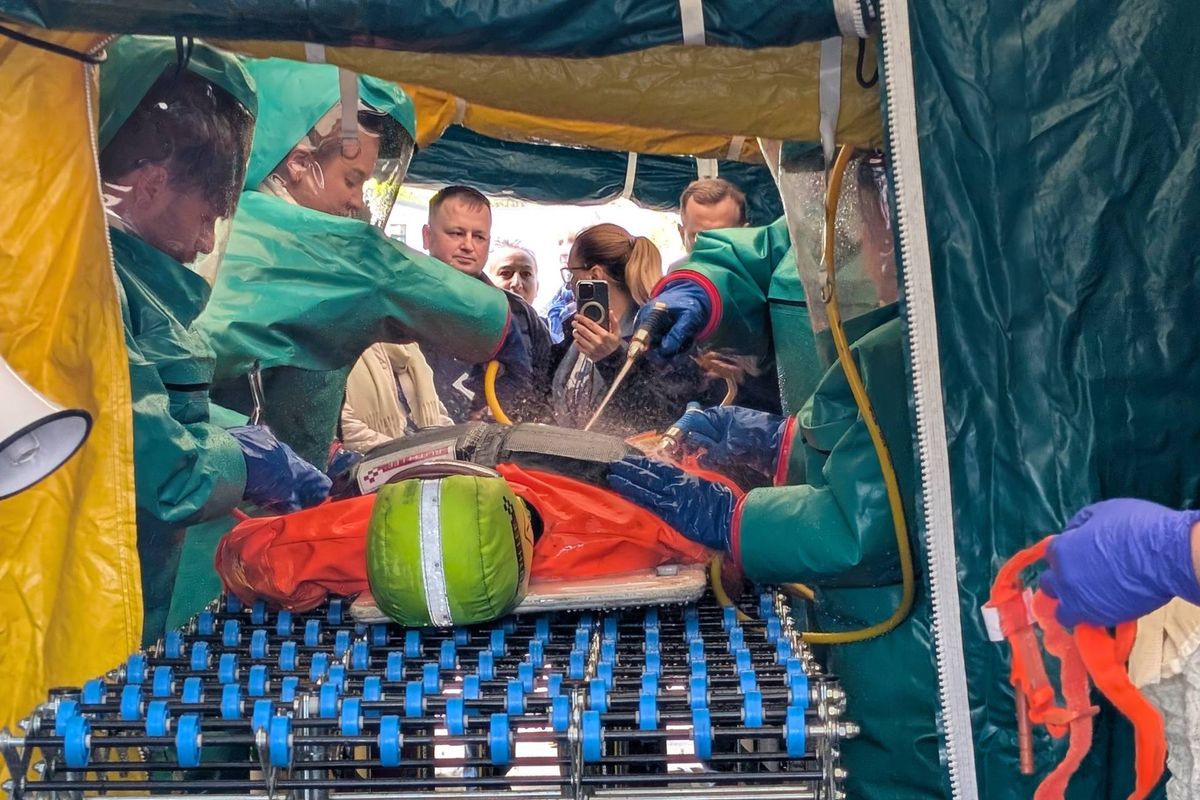
British specialists in CBRN response and decontamination procedures shared their expertise with 22 delegates from five European countries during a study visit to the National Health Service Resilience Emergency Capabilities Unit at the United Kingdom’s Fire Service College in Moreton-in-Marsh, on 20-22 April.
The event, which was organised by the World Health Organization (WHO) and funded by the European Union through the EU4Health CBRN Action, "offered participants an in-depth look at the English ambulance service’s operational capability", according to the WHO.
"Delegates from Estonia, Hungary, Lithuania, Romania and Ukraine engaged with subject-matter experts, observed live demonstrations and participated in discussions exploring international collaboration."
The WHO noted that the UK has been working on systems to enhance the interoperability of their emergency services response, equipment and protocols following major public incidents such as the terrorist attacks in Manchester and London in 2017 and the 2018 Novichok nerve agent poisonings in Salisbury.
A live decontamination demonstration of a "worst case CBRN scenario" showed how to set up decontamination facilities, use personal protective equipment, and manage and triage casualties. Christian Cooper, associate director of the NHS Emergency Capabilities Unit explained that the demonstration was a "big wet decontamination of a large number of people using the highest levels of PPE that we have".
"But those same staff are trained to go out every day and deal with chemical spills and industrial accidents. That’s routine for them, so they’re simply scaling up a skill set that they already have, and that allows us to make sure that they maintain a good state of readiness for the wide range of incidents that they might face.
"Having health professionals with a lot of experience from a very diverse range of health systems and economies across Europe come and see what we’re doing but also comment on and compare it to what they do and see where the gaps may be in both our responses, is absolutely invaluable," he said.
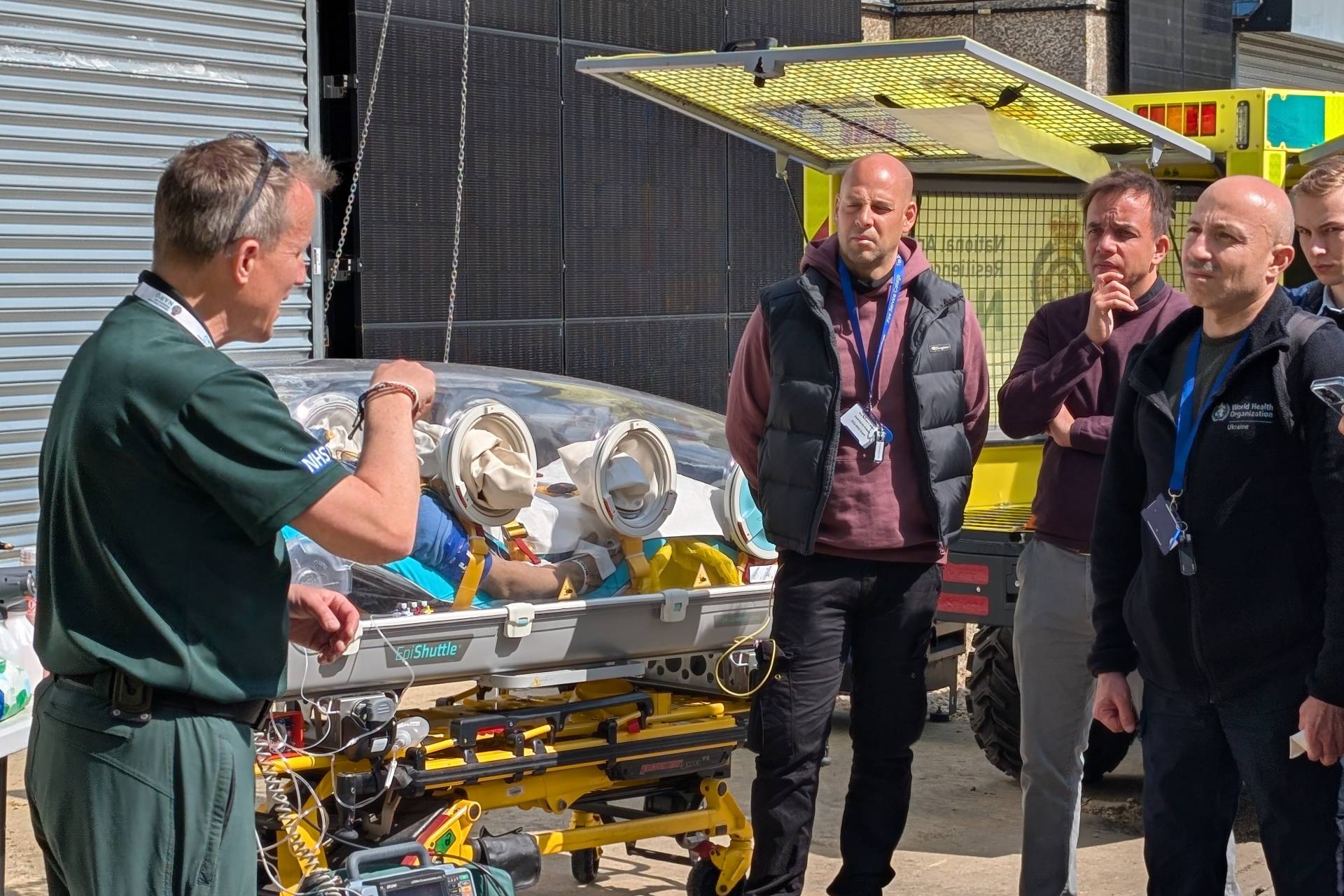
Delegate voices
"One of the key insights from this study trip was the realisation of the importance of a systematic approach to preparedness, where the main focus is not only on response, but also on the constant maintenance of operational capacity through regular training, intersectoral interaction and clearly defined roles of each participant in the process," said Tetiana Orafina, deputy director of the Public Health Centre, Ukraine.
"I was impressed by the interagency working models," said Odeta Vitkūnienė, director of Personal Health Care, Ministry of Health, Lithuania. "Lithuania is doing a lot on preparedness, but intersectoral decision-making is an area we can work on. International collaboration and the sharing of good practices improve our health system preparedness."
Meanwhile, Kamal Akbarov, from the Technical Office CBRN, WHO Country Office in Ukraine, said: "WHO continues to advance CBRN preparedness and response across the region. The United Kingdom’s leadership and commitment to partnership underscore the vital role of European knowledge exchange and cooperation in developing interoperable CBRN standards."
"The United Kingdom’s extensive CBRN experience offers practical models and expertise that can be adapted and applied to support national preparedness and response capacities, strengthening collective health security across borders."