Croatia declares itself free of landmines 30 years after Yugoslav wars

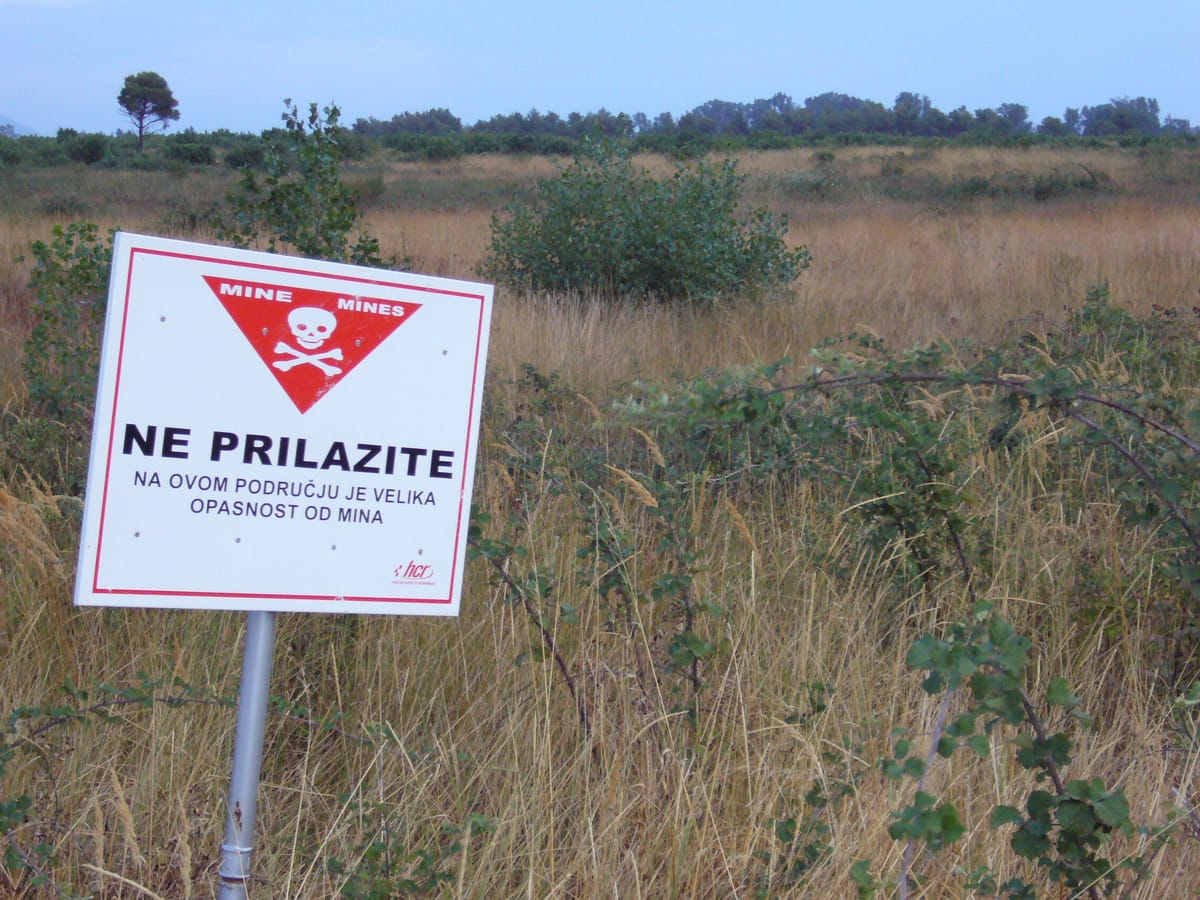
Croatia has declared itself free of landmines after a three-decade campaign to clear the country of mines and unexploded ordnance left over from the 1991-95 Croatian war of independence that followed the breakup of Yugoslavia.
It is estimated that, in Croatia alone, around 13,000 square kilometers were once contaminated by landmines. This legacy came to an official end as Croatia’s interior minister, Davor Božinović, announced on Friday 27 February that the country had completed its demining operations.
"This is not just a technical success," Božinović said at an event in Zagreb, "it is the fulfilment of a moral obligation to the victims of mines and their families."
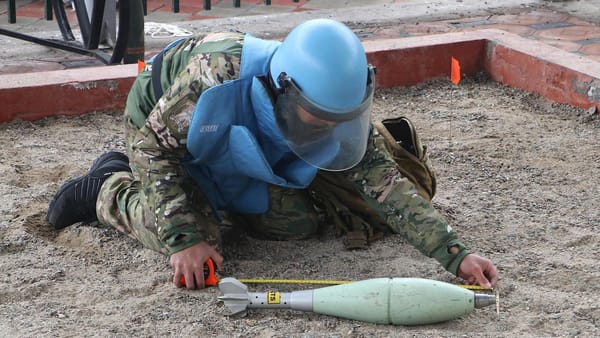
The last known mine was removed earlier this year in Lika-Senj county, a sparsely populated mountainous region in western Croatia. Since the end of the conflict, Croatia has spent around €1.2 billion on clearance efforts, deploying metal detectors, mechanical equipment and specially trained detection dogs to return land to safe use.
"A total of 410,000 anti-personnel and anti-tank mines and other explosive remnants of war were removed," Davor Laura, head of the Croatian Mine Action Centre, told public broadcaster HRT.
"Of those 410,000 explosive devices, 103,000 were anti-personnel and anti-tank mines and 307,000 were other explosive remnants of war, or unexploded ordnance," he added.
Over 160 countries have signed the 1997 Ottawa Convention banning the use, production and storage of anti-personnel landmines, but major countries such as the United States, China and Russia are not part of the treaty.
Furthermore, a number of countries on the EU and NATO’s eastern flank - including Poland, Lithuania, Latvia and Estonia - have recently withdrawn from the agreement along with Ukraine due to Russia's ongoing full-scale invasion of its neighbour.