First radioactive capsules transferred at the Hanford Site, Washington

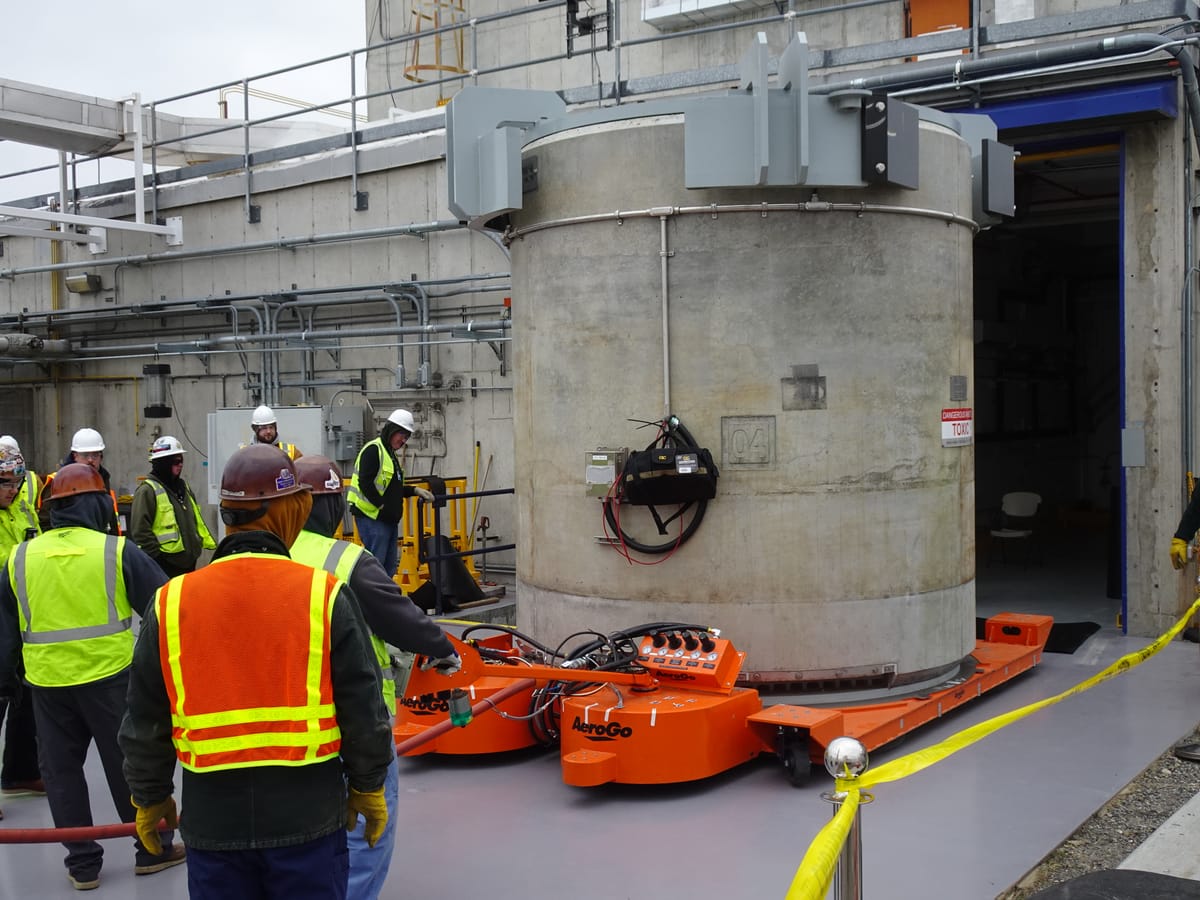
The first batch of highly radioactive capsules has been successfully moved from underwater pools to safer, long-term dry storage at the Hanford Site in Washington, USA.
According to a news release from Washington's Department of Ecology, the transfer marks a major milestone in efforts to reduce one of Hanford’s largest environmental risks.
The Hanford Site is a decommissioned nuclear production complex that was established in 1943 as part of the Manhattan Project, the research and development programme during World War II to produce the first nuclear weapons. Early safety and waste disposal procedures were inadequate, however, and the site is now the location of a major environmental clean-up.
The Washington Department of Ecology, which is responsible for regulating the clean-up operation, writes that a total of 1,936 capsules containing caesium and strontium - making up about one-third of the total radioactivity at the site - will be moved into large concrete casks and placed in outdoor storage over the next several years.
"We’re continuing to make historic progress at Hanford," said Stephanie Schleif, the nuclear waste programme manager. "Transferring these capsules to safe dry storage is a top priority for the state and is integral to the goal of cleaning up Hanford and protecting the environment and surrounding communities."
Meanwhile, governor Bob Ferguson said: “This is a significant step forward for safety at Hanford. Thank you to the workers performing this complex and important work. Transferring these capsules of waste to safer, long-term storage will help protect workers, communities and the environment for generations to come."
The caesium and strontium are a byproduct of Hanford’s plutonium production. They were removed from Hanford’s large underground storage tanks in the 1970s to reduce the temperatures inside the tanks. The caesium and strontium were put into the capsules and stored underwater at a waste encapsulation and storage facility. The water pools at this facility provided radioactive shielding and help remove heat generated by the capsules, according to the Department of Ecology.
However, the capsules would pose a significant risk should an earthquake or other event rupture the water basin at the ageing facility. The capsules are being loaded into 18 specially designed casks, placed in permitted outdoor storage onsite and connected to temperature sensors. The casks provide both passive cooling for the capsules and robust shielding to protect workers and the environment.
Each cask will take about two months to fill and transfer to the storage pad, where they will remain until the radiation has decayed to safer levels and a final disposal plan is determined. The waste encapsulation and storage facility that has housed those capsules will ultimately be deactivated and demolished as clean-up continues.
The US Department of Energy must move all capsules to dry storage by 30 September 2029, a deadline set in the legally binding Tri-Party Agreement.