Hanford begins removing chemical, radioactive waste from 24th single-shell tank

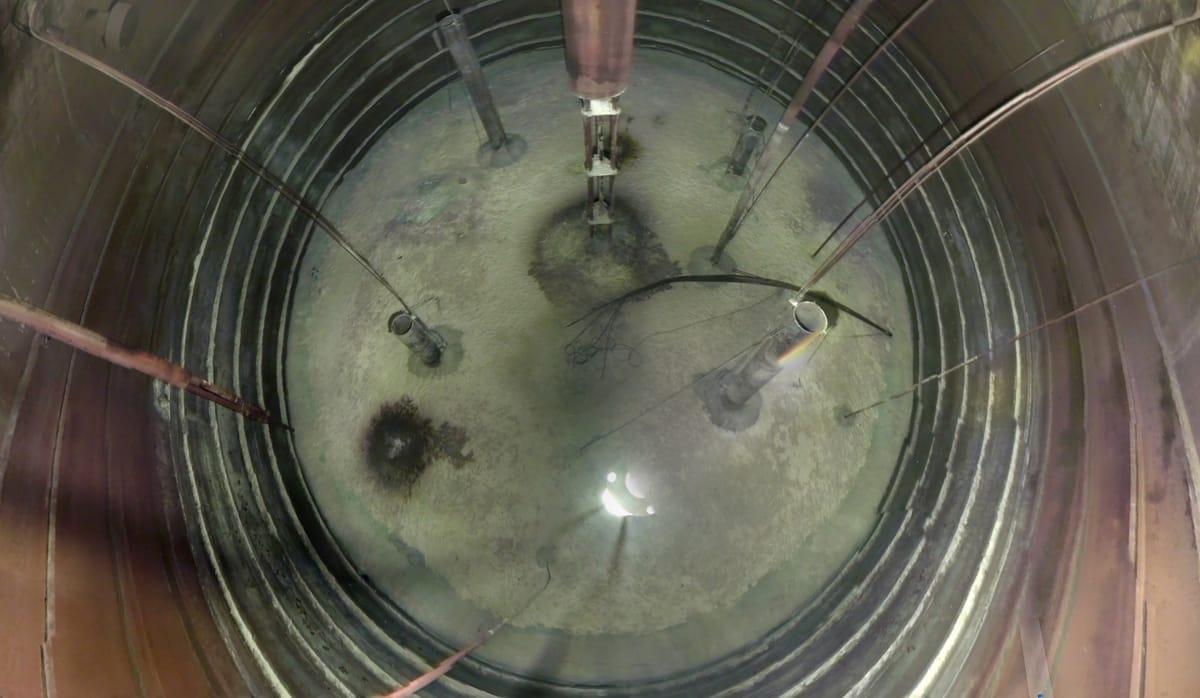
The US Department of Energy’s Office of Environmental Management announced on Tuesday 10 February that crews at the Hanford Site near Richland, Washington, have started retrieving radioactive waste from Tank A-106, a one-million-gallon underground storage tank built in the 1950s.
The Hanford Site is a decommissioned nuclear production complex that was established in 1943 as part of the Manhattan Project, the research and development programme during World War II to produce the first nuclear weapons. Early safety and waste disposal procedures were inadequate, however, and the site is now the location of a major environmental clean-up.
Tank A-106 will be the 24th single-shell tank that crews have cleaned out at Hanford, which is home to 177 underground waste storage tanks, holding a total of around 56 million gallons of chemical and radioactive waste resulting from plutonium production at the site.
According to the Washington Department of Ecology, at least 68 of Hanford’s tanks are assumed to have leaked in the past, and three are currently leaking.
Tank A-106 contains about 80,000 gallons of solid waste, which now are being transferred to one of the newer, double-shell tanks for continued safe storage. A-106 is one of two tanks currently undergoing retrieval operations. In March 2025, the Hanford Field Office and its tank operations contractor the Hanford Field Office began retrieving waste from Tank A-102, a 1-million-gallon tank holding about 41,000 gallons of solid waste.
"Safely cleaning up legacy waste at Hanford is not just a technical challenge - it’s a responsibility that honours our commitment to protecting our workforce, our communities and the environment," said Katie Wong, programme manager with the Hanford Field Office Tank Farms Programs Division. "Every step forward reinforces our dedication to a safer future for generations to come."