Navalny likely killed by poison dart frog toxin, confirms UK government

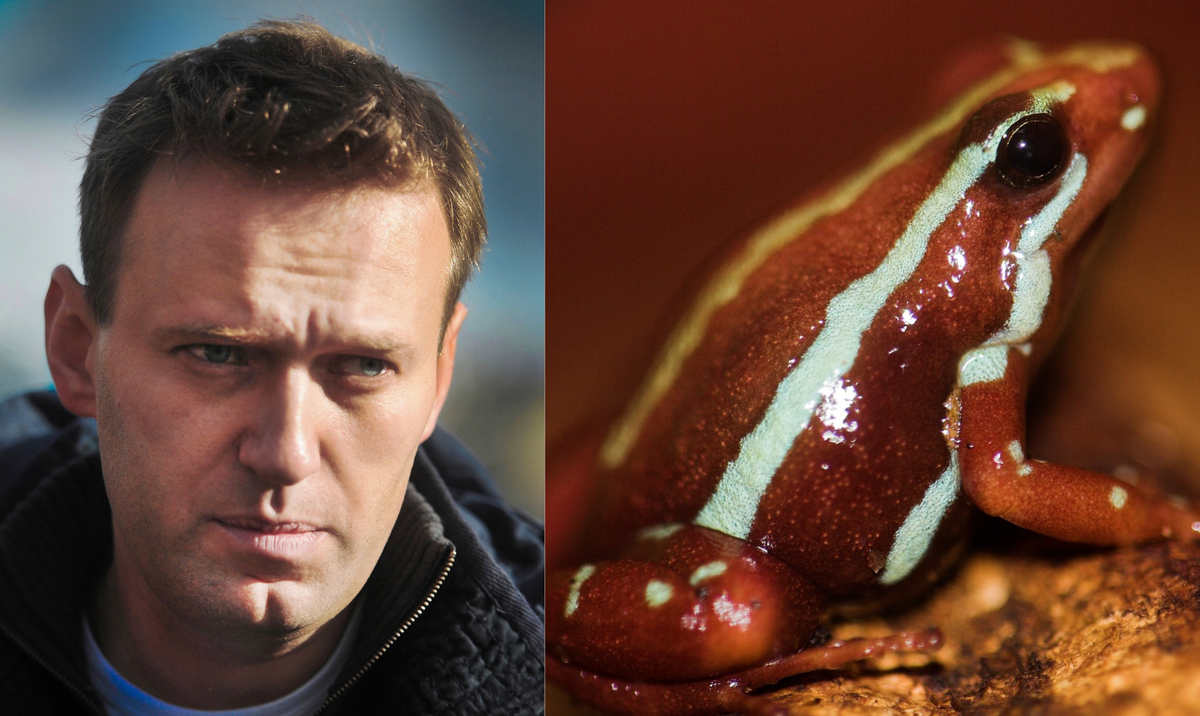
The government of the United Kingdom has confirmed that the prominent Russian opposition figure, Alexei Navalny, who died in prison in 2024, was likely killed by a deadly toxin found in the skin of Ecuador dart frogs.
In a statement released on Saturday 14 February, the UK government wrote that "consistent, collaborative work has confirmed through laboratory testing that [...] epibatidine was found in samples from Alexei Navalny’s body and highly likely resulted in his death".
Dart frogs in captivity do not produce epibatidine and it is not found naturally in Russia. However, it can be found naturally in dart frogs in the wild in South America. Studies have shown epibatidine to be at least 200 times more potent than morphine.
"There is no innocent explanation for its presence in Navalny’s body," the UK government wrote. "Only the Russian state had the means, motive and opportunity to deploy this lethal toxin to target Navalny during his imprisonment in a Russian penal colony in Siberia, and we hold it responsible for his death. "
Violation of the Chemical Weapons Convention
The murder of Alexei Navalny by epibatidine would be a violation of the Chemical Weapons Convention, of which Russia is a state party and has been repeatedly accused of violating over the past decade.
The UK wrote in its statement: "It is clear Russia did not destroy all its chemical weapons as claimed in 2017, and that it has not renounced biological weapons, as it is obliged to under the Biological and Toxin Weapons Convention. "
The 2018 Salisbury poisonings of Sergei and Yulia Skripal, and subsequent death of Dawn Sturgess, the poisoning of Alexei Navalny in August 2020, and Russia's frequent use of riot control agents as a method of warfare during its continued full-scale invasion of Ukraine, are three prominent cases of such violations.
A joint statement released by the UK, Sweden, France, Germany and the Netherlands noted that their permanent representatives to the Organisation for the Prohibition of Chemical Weapons in The Hague have written today to the director general to inform him of the breach of the Chemical Weapons Convention.
"We and our partners will make use of all policy levers at our disposal to continue to hold Russia to account," the joint statement concluded.