New CBRNE lab for pandemic response opens near Singapore's Changi Airport

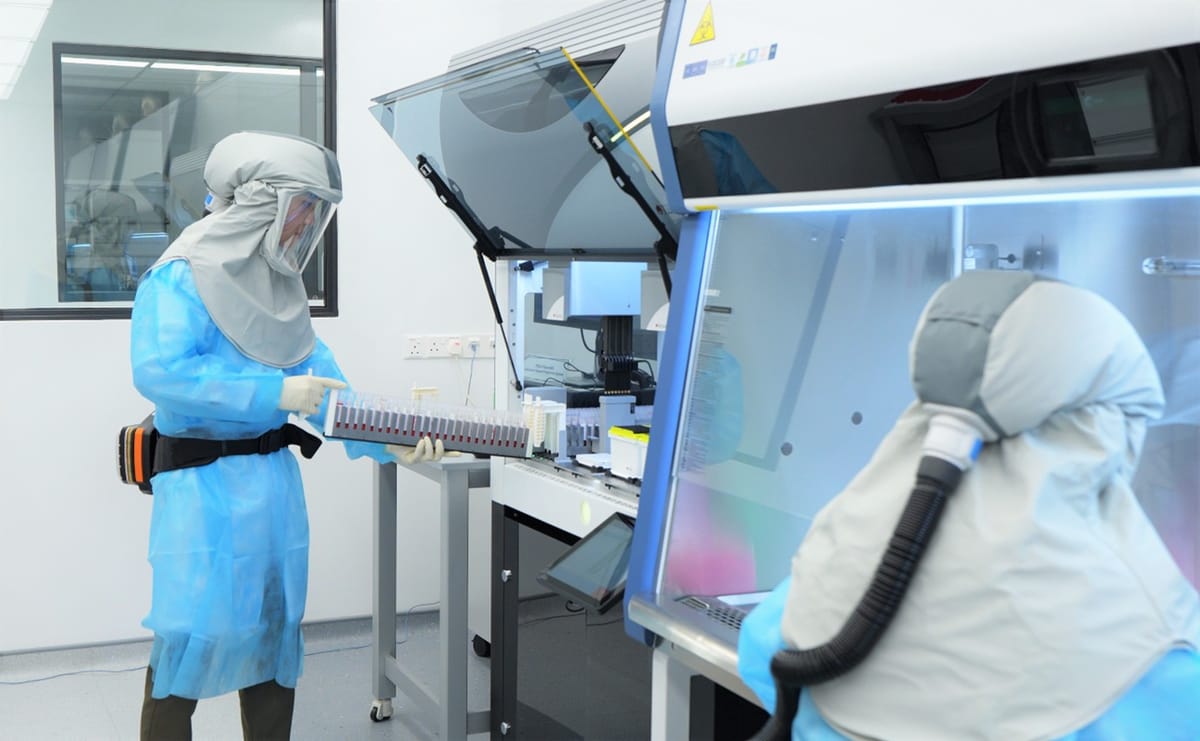
A new government laboratory has opened near Singapore's Changi International Airport to strengthen the country's pandemic preparedness and response to CBRNE threats.
CBRNE@Changi, which was opened on Friday 16 January and is located in the Changi Airfreight Centre, was designed based on lessons from COVID-19. The new facility will reduce pandemic testing times from six to four hours, and the clinical cargo testing capacity will be increased tenfold.
Before CBRNE@Changi was built, cargo swab samples had to be transported to the Woodlands Checkpoint Lab on the northern shore of Singapore. During COVID-19, swab samples had to be transported from Changi Airport to the Pasir Panjang lab in the south for processing.
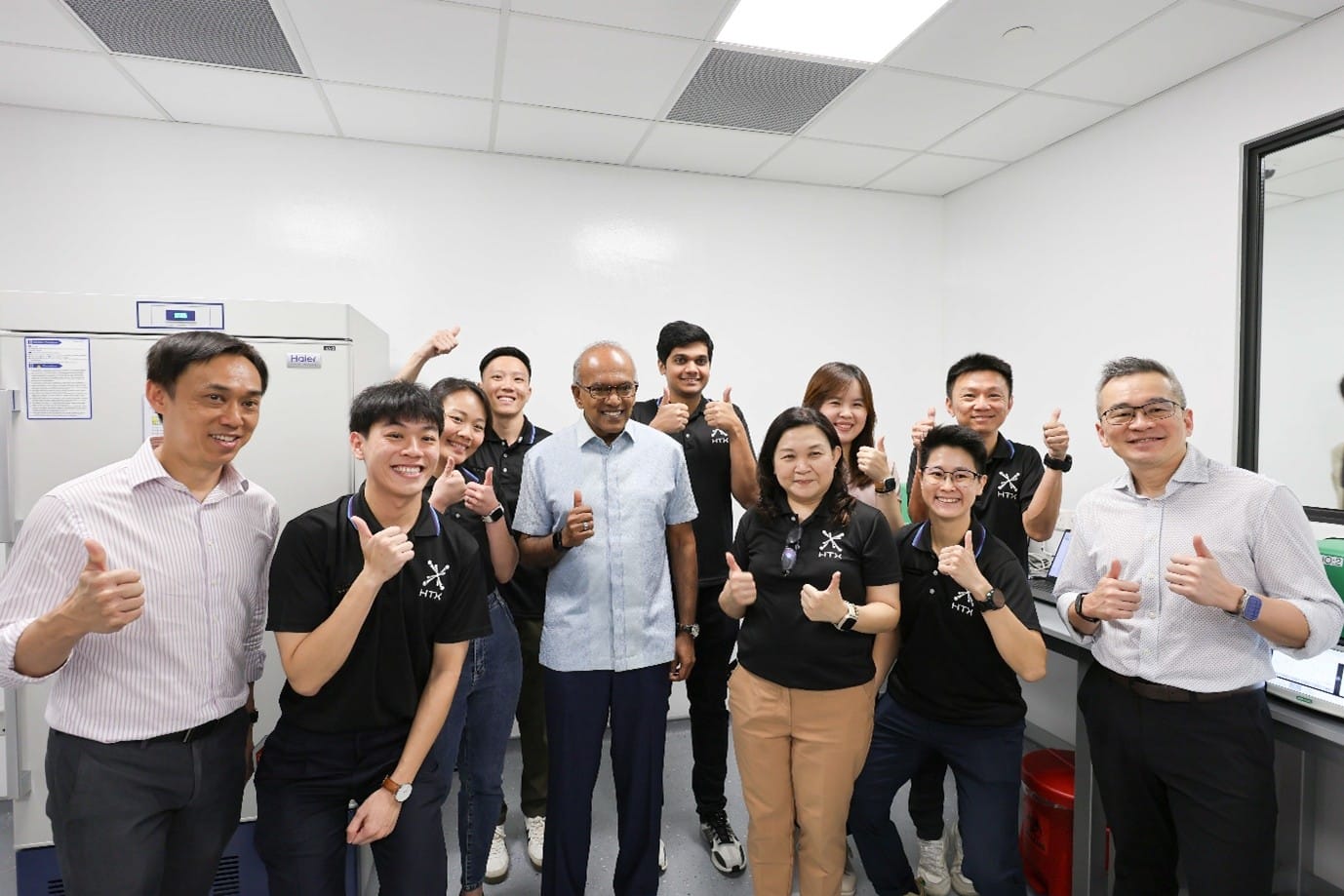
CBRNE@Changi is the latest addition to the growing network of research and development facilities across the country operated by the Singaporean government's science and technology agency for public safety, HTX. It is also the first CBRNE lab in eastern Singapore.
Speaking to reporters after a tour of the facility, coordinating minister for National Security and minister for Home Affairs, Kasiviswanathan Shanmugam, said: "People may wonder why? COVID-19 is over.
"When the next pandemic strikes, you're not going to have time to prepare this. So with the lessons learnt, we have put in a state-of-the-art facility for testing for pandemics.
"The world is changing before our eyes. We see it. The threats are evolving, and there are people around the world who want to do bad things."

Three distinct zones
Spanning 6,352 square metres, CBRNE@Changi is split into three distinct zones: a "clinical workflow area" to support pandemic testing operations, a "FAST lab" for CBRNE research and a "CBRNE area" for day-to-day operations.
According to HTX, such operations include "cargo sample testing, sensor-related research to detect bio-terrorism agents and assessments of devices like the e-Nose, which detects hazardous airborne chemicals".
The zonal design of the facility makes it more resilient in the event of a pandemic. The CBRNE area can be sealed off via an air-locked corridor to prevent cross-contamination with pandemic tests while keeping daily operations running. As testing needs surge, the FAST lab can be reconfigured to add capacity.
May Ong, director of HTX's CBRNE Centre of Expertise, said that, during COVID-19, they had to juggle border screening with human swab testing. "These two processes are actually clashing," she said, adding that the team had to give up CBRNE screening and proceed with clinical testing.
"So this facility addresses this shortcoming, whereby actually two labs can now operate without being in conflict," said Ong, adding that the effort required careful infrastructural planning, design and coordination.
New research capabilities
The facility has been equipped with deeper research and development capabilities driven by artificial intelligence. One research area will be dedicated to omics, which is "the large-scale study of entire sets of biological molecules within an organism such as genes, proteins or metabolites, to understand how these components interact as a whole", according to HTX.
Meanwhile, a second area will focus on "agnostic detection", which includes the development of tests and diagnostic tools for broad testing. These capabilities will allow scientists to identify threats without prior knowledge of a specific agent or substance.
The lab will also be used to check and validate CBRNE handheld detectors.