OPCW releases landmark report on AI and the Chemical Weapons Convention

The Organisation for the Prohibition of Chemical Weapons has released a landmark report on artificial intelligence and the implementation of the Chemical Weapons Convention.
Released on 3 March 2026, the report "provides a structured, forward-looking assessment of how AI is reshaping chemical science and related disciplines, and what this means for the implementation of the Chemical Weapons Convention", according to the OPCW.
"It underscores that AI is no longer a peripheral development, but a cross-cutting issue with direct relevance to verification, industry practices, training and international security."
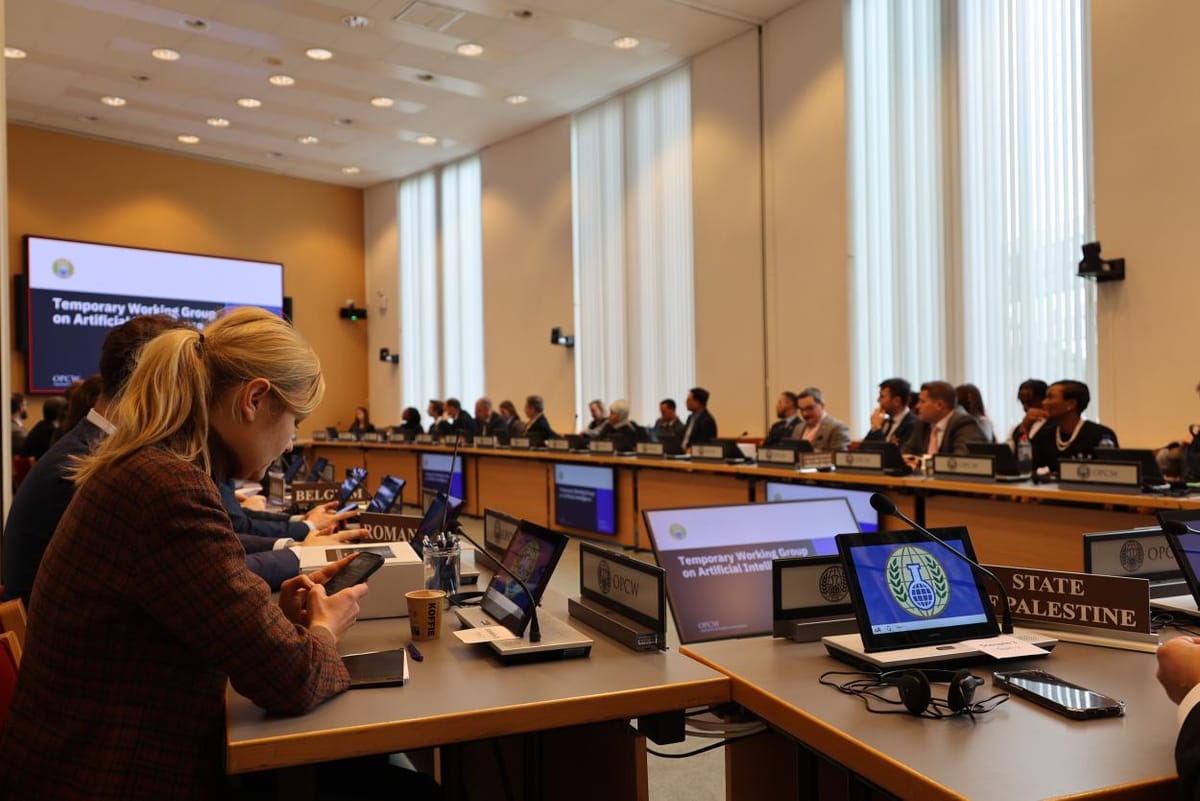
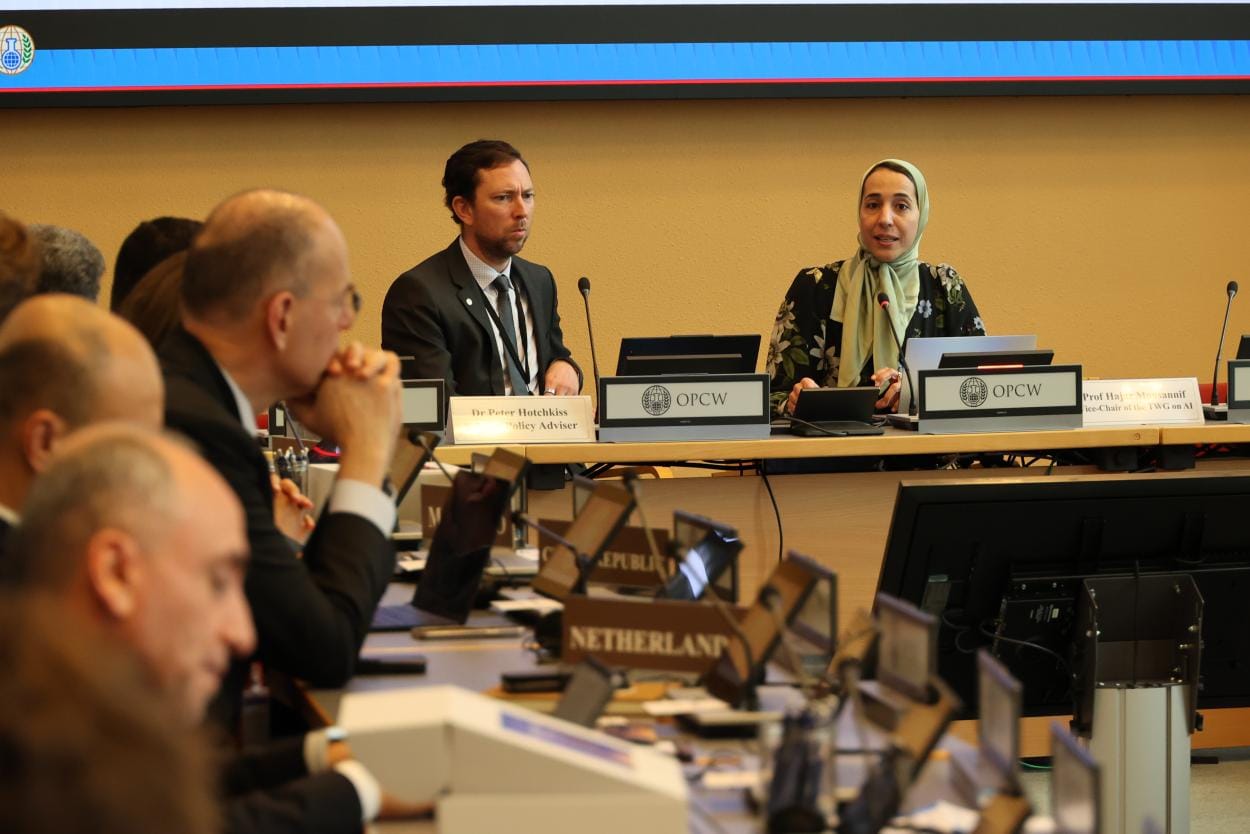
The report was prepared by the Scientific Advisory Board's Temporary Working Group (TWG) on artificial intelligence and it was presented at a side event during the 111th Session of the Executive Council taking place on 10-13 March.
The report's release follows the OPCW's "Global Conference on the Role of Artificial Intelligence in Advancing the Implementation of the Chemical Weapons Convention" that took place in Rabat, Morocco, on 22-24 October 2024.
Background
The Temporary Working Group examined recent advances in AI, consulted experts from academia, industry and international organisations, and assessed how these technologies may affect both the opportunities and risks facing the Convention.
Prof. Hajar Mousannif, vice-chairperson of the TWG said: "Artificial intelligence is rapidly transforming how scientific knowledge is produced, accessed and applied. The report of the Scientific Advisory Board’s Temporary Working Group on AI highlights both the opportunities and the challenges that AI presents for the implementation of the Chemical Weapons Convention."
"Our work aims to support the OPCW in anticipating technological developments, strengthening scientific awareness and ensuring that advances in AI are understood and addressed within the framework of responsible and peaceful uses of science and technology," she highlighted.
Opportunities and emerging risks
According to the OPCW, the TWG found that AI-enabled tools are already transforming how chemical research is conducted. "Molecular modelling, AI-assisted synthesis planning and predictive analysis allow scientists to identify chemical pathways faster and predict the properties and potential toxicity of new substances with increasing accuracy."
"At the same time, the speed and accessibility of these tools mean that some technologies that accelerate legitimate research could also lower the expertise and time required to design harmful chemicals that could be weaponised. The TWG therefore highlights the importance of awareness, responsible innovation and continued monitoring of how AI tools are used in chemistry."
The report also states that AI tools could assist in organising and analysing information submitted in OPCW member states' detailed declarations about relevant chemical activities. This might include identifying patterns, inconsistencies or trends that may require closer attention.
AI could also be used to help analyse open-source information "to support mission preparation and situational awareness before inspections or investigations", as well as helping to process spectral data derived from chemical instruments and sensors.
"The TWG report also highlights a broader shift in how chemistry itself is being conducted. AI is increasingly being combined with automated and remotely operated laboratories. As these technologies become more accessible, the way chemicals are designed, tested and produced could change significantly. This means that the indicators used to understand chemical activities may also evolve," an announcement from the organisation concluded.
Recommendations for the OPCW and member states
The TWG report outlines several recommendations to help the OPCW and its Member States navigate these developments.
The TWG recommends that the OPCW:
- continue to monitor advances in AI and assess their potential impact on chemistry and the Chemical Weapons Convention;
- strengthen dialogue with scientists, technology developers and industry, helping raise awareness of the Convention and encourage responsible innovation;
- explore how AI can support the Organisation’s own work, including data analysis, verification support and training tools, while maintaining strong safeguards and human oversight;
- build partnerships with scientific and technology communities, including publishers, developers and research institutions, to promote responsible use of AI in chemistry;
- support knowledge-sharing and capacity-building among member states, ensuring that all countries can benefit from advances in AI while managing potential risks.