Savannah River Site sees record radioactive risk reduction

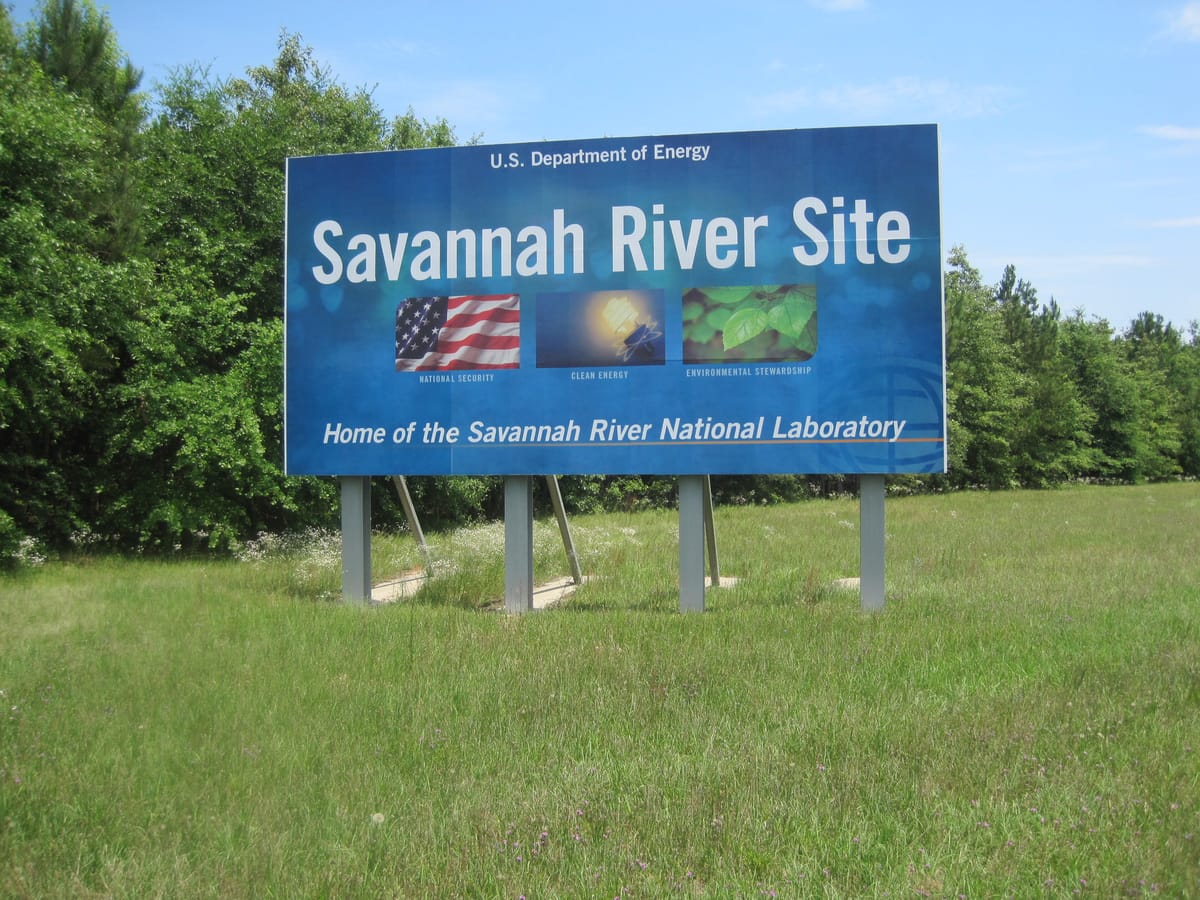
Savannah River Site's legacy radioactive tank waste has seen a record reduction in the amount of radioactivity over the past four years.
The US Department of Energy reported on Wednesday 25 February that there are now 46 million fewer curies in the tank waste since 2022. This is more than double the amount removed over the last eight years.
While some of the radioactivity in the tank waste decayed naturally, the vast majority of the curie reduction — 36 million — has been through the Office of Environmental Management’s radioactive liquid waste processing facilities, such as the salt waste processing facility and defence waste processing facility.
"Curies are reduced from the waste by removing the highly radioactive sludge, where the majority of the curies are found in the high-activity radionuclides like caesium and strontium, from the tanks," the department explained in its announcement. "The sludge is treated at the defence waste processing facility, where it is vitrified and poured into stainless steel canisters safe for long term storage and disposal."
Increased production at the salt waste processing facility has also counted towards the milestone, with more than 10.6 million gallons of salt waste having been processed there since 2022.
The waste at Savannah River Site is a byproduct from processing nuclear materials for national defence, research, medical programmes and for NASA missions, according to the Department of Energy. The waste — totalling 33 million gallons or almost 125 million litres — is stored at Savannah River Site in two groupings of underground waste tanks known as tank farms.