Syria's rights and privileges reinstated during OPCW Executive Council

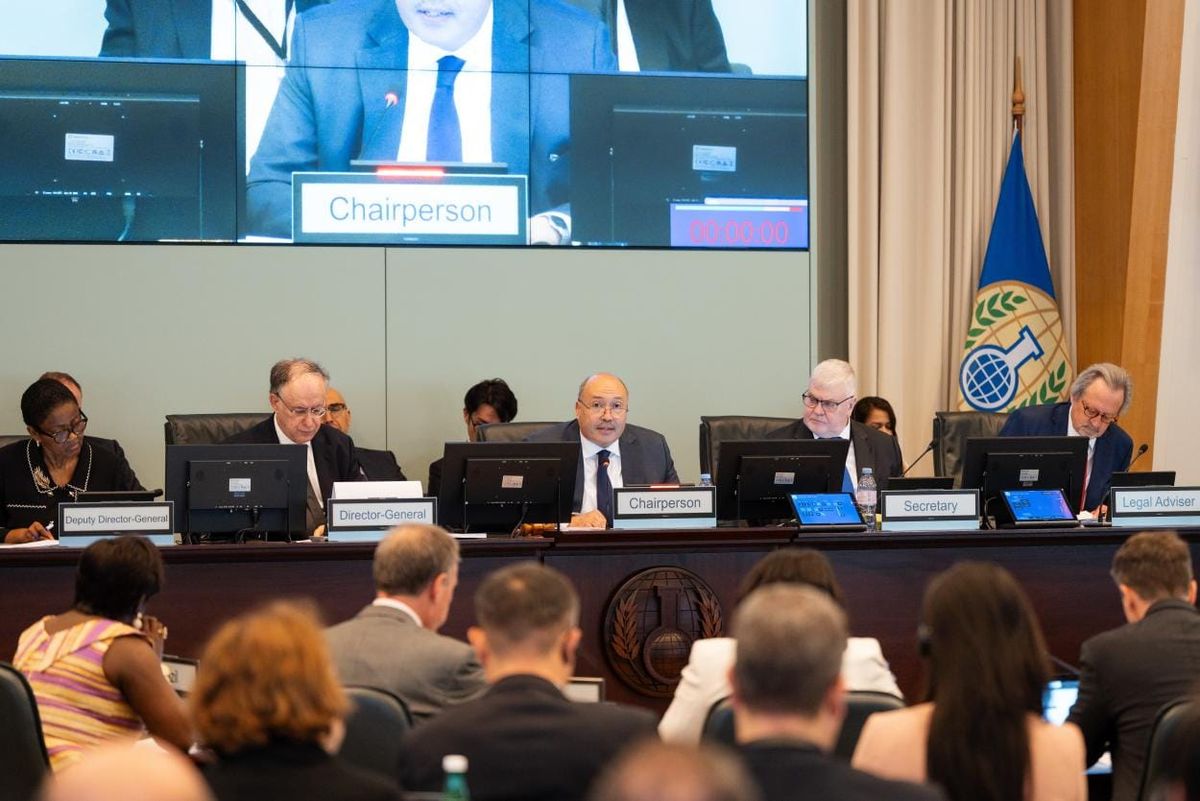
Executive Council of the Organisation for the Prohibition of Chemical Weapons (OPCW) has adopted a draft decision to reinstate Syria's rights and privileges at the OPCW that had been suspended since 2021.
Adopted during the 112th session of the OPCW Executive Council, the decision was co-sponsored by 67 states parties from different regional groups and adopted by consensus.
In a news release issued by the OPCW on 9 July, the OPCW wrote that the reinstitution of Syria's rights and privileges comes after the countries new authorities "committed to fulfilling Syria’s obligations under the Convention and have since taken concrete steps to cooperate with the Technical Secretariat to achieve this goal".
Syria, under its former regime led by Bashar Al Assad, had its OPCW rights and privileges suspended in 2021 due to their failure to declare the full scope of its chemical weapons programme and the confirmed use of chemical weapons on Syrian territory. Both constituted serious violations of Syria’s obligations under the Chemical Weapons Convention, according to the OPCW.
In the decision, the Executive Council welcomed the progress made by Syria in addressing outstanding issues related to its chemical weapons programme, including the amendment of its initial declaration, the preparation of facility agreements, the facilitation of verification activities by the Technical Secretariat and initial steps towards the destruction of identified remnants, including the preparation of an agreed detailed plan for verification and preparations for destruction activities.
The Executive Council also approved a detailed plan for the verification of the destruction of Category 3 chemical weapons at Al Qutayfah, and two separate facility agreements for the systematic verification of the Al Qutayfah and Homs chemical weapons storage facilities.
"Continued cooperation and constructive engagement"
"These decisions reflect the tangible progress achieved through continued cooperation and constructive engagement between the Technical Secretariat and the Syrian Arab Republic, with the support of the wider community of States Parties," said OPCW director-general Fernando Arias.
"The decisions provide a robust framework for advancing the next phase of verification and destruction activities, under the aegis of the Executive Council, and marks another milestone in the OPCW’s efforts to achieve the complete and verified elimination of all remaining chemical weapons associated with the former Syrian government," he added.
During the 13-year civil war in Syria from March 2011 to December 2024, the now deposed regime led by Bashar Al Assad was accused of the majority of chemical weapons attacks, prompting international condemnation and military responses.
The Ghouta attack in August 2013 - the deadliest use of chemical weapons in the conflict and the worst since the Iran–Iraq War - prompted an international agreement to eliminate Syria's chemical weapons and dismantle its arsenal. Although most declared stockpiles were destroyed, several lethal chemical attacks followed in subsequent years raising concerns about undeclared stockpiles.
The fall of the Assad government in December 2024 created an opportunity to uncover the full scope of Syria’s chemical weapons programme and to eliminate it in line with the Chemical Weapons Convention. In February 2025, the OPCW director-general visited Syria and held separate meetings with the Syrian president and foreign minister, while it was announced in March that Syria would lead an international task force to destroy the country's chemical weapons.