Tajikistan and OSCE lead four-week EOD and tactical combat casualty care course

The Organization for Security and Co-operation in Europe (OSCE) has announced the conclusion of a four-week regional training course in Tajikistan on explosive ordnance disposal and tactical combat casualty care.
The course, which concluded on 6 February 2026, was organised by the Regional Explosive Hazards Training Centre of Tajikistan's Ministry of Defence, in partnership with the OSCE Programme Office in Dushanbe.
An article published by the OSCE noted that the course trained 18 mine action professionals from Kazakhstan, Kyrgyzstan, Tajikistan, Turkmenistan and Uzbekistan, "highlighting Tajikistan’s role as a regional platform for demining expertise".
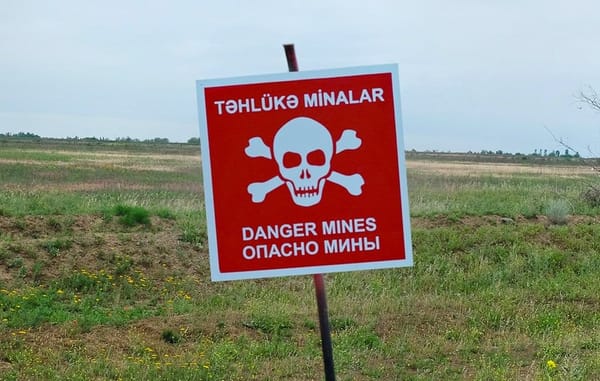
Tajikistan is the worst affected of the five Central Asian republics by landmines and explosive remnants of war. As of the end of 2022, Tajik authorities estimated that some 11.45km2 of their territory remained contaminated by landmines.
International participants
Participants in the course in Dushanbe also included specialists from Fondation suisse de déminage, Norwegian People’s Aid and the OSCE, the article noted.
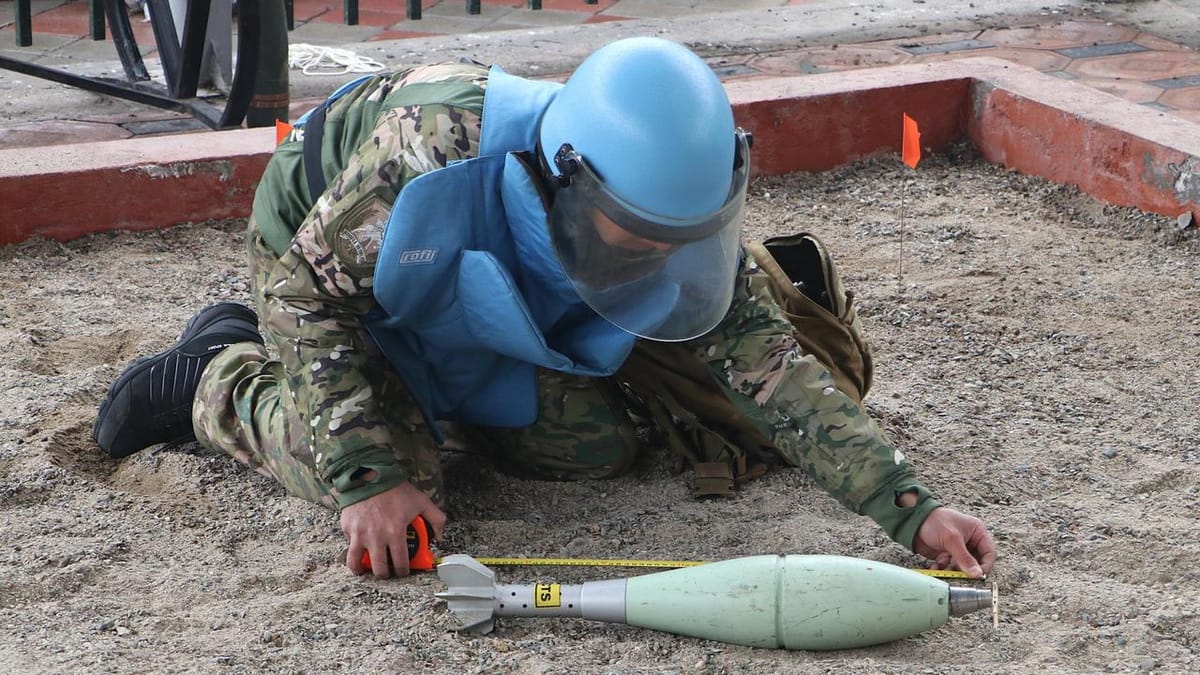
"The curriculum provided a sophisticated blend of theoretical and practical training designed specifically for high-risk environments. Participants were trained on EOD reconnaissance, ordnance movement, demolition range management and full mission profiles, and thereby strengthened their capacity to manage complex explosive threats.
"Key competencies included determining safe transport protocols for specific ordnance, identifying various fuse types and conducting simultaneous disposal operations in accordance with international mine action standards."
Information management officer at Norwegian People's Aid, Azima Davlatkhojaeva, who participated in the training, said: "The EOD Level 2 course was a meaningful and empowering experience for me. The training was challenging, but it helped me build confidence and improve my technical skills and practical experience in explosive ordnance disposal. As one of the female participants, I was reminded that women can do this work just as well and play an important role in mine action. On a personal level, this course showed me how much I am capable of. I felt proud to represent women in this field."
Tactical combat casualty care training
Alongside the technical EOD training, the United States-led tactical combat casualty care (Tier 2) training equipped participants with essential combat lifesaver skills. "Through realistic simulations, participants learned how to control severe bleeding, manage airways and stabilise circulation. This training enabled EOD teams to deliver immediate, life-saving care after injury, even in remote and hazardous environments," according to the OSCE.
The training forms part of the OSCE Programme Office in Dushanbe's "Integrated Co-operation on Explosive Hazards" programme, which supports regional stability by strengthening national capacities. In 2025 alone, the programme strengthened the capacity of 87 personnel across Central Asia through six dedicated Tajikistan-led EOD courses, fostering sustainable capacity to mitigate explosive threats in the region.