Traces of iodine-129 found in Philippine waters, but no cause for alarm

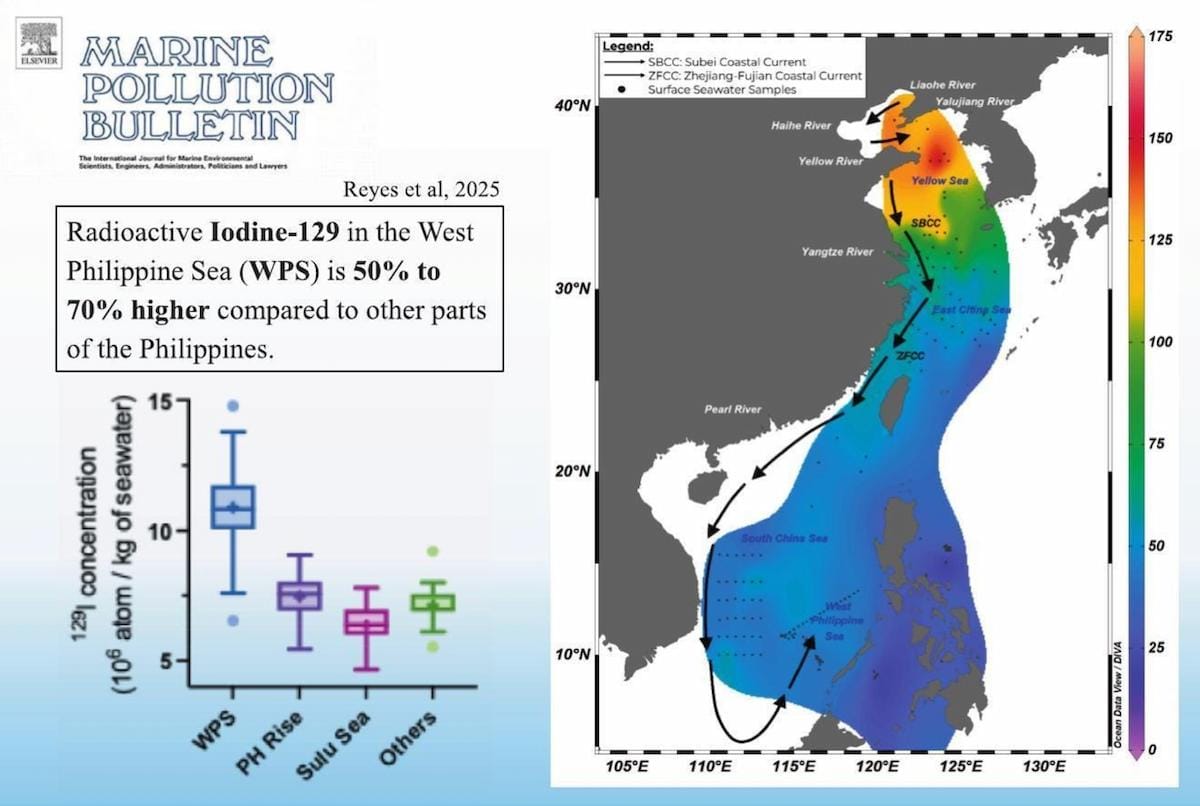
Scientists in the Philippines have discovered "unusually high" levels of the radioactive substance iodine-129 in seawater samples taken off their west coast.
Iodine-129 is a long-lived radioactive isotope that is often used as a tracer to detect nuclear-related pollution. However, the Philippines does not have any nuclear power plants or a nuclear weapons programme, meaning that the source of the pollution likely came from elsewhere.
The 119 samples were taken from different areas in the South China Sea, which in the Philippines is known as the West Philippine Sea. Experts from the Philippine Nuclear Research Institute, the University of the Philippines Marine Science Institute and the University of Tokyo found that the levels of iodine-129 in these samples were between 1.5 to 1.7 times higher compared to samples taken elsewhere.
By studying ocean circulation and isotope signatures, the scientists concluded that the pollution had likely been carried south by currents from the Bohai Sea and Yellow Sea in China, areas which have been exposed to iodine-129 from old nuclear fuel processing and past nuclear weapons tests.
Not a contamination scare
In the report, the scientists stressed that the discovery should not be a cause for alarm, and that the detected levels did not pose any threat to people, fisheries or marine ecosystems. “This is not a contamination scare,” the researchers emphasised, according to Newsline Philippines. “It’s a reminder that what happens elsewhere in the world can eventually reach our waters.”
Instead the scientists highlighted the importance of "long-term monitoring, transparency and regional cooperation" to ensure early detection, better preparedness and informed decision-making to protect coastal communities.