United States CPE CBRND develops "system of systems" decontamination capability

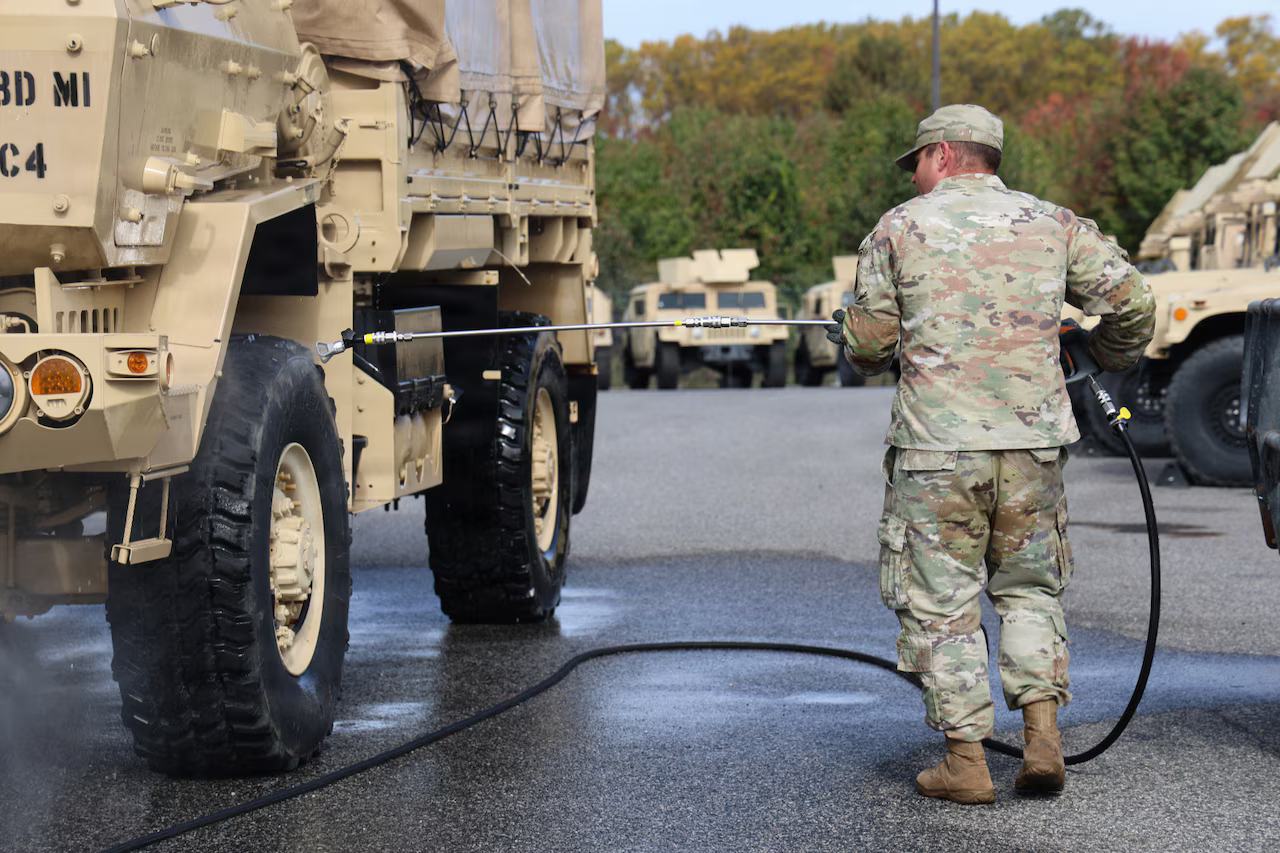
The United States Capability Program Executive for Chemical, Biological, Radiological and Nuclear Defense's (CPE CBRND) Joint Project Manager for CBRN Special Operations Forces is delivering a "system of systems" decontamination capability for missions in austere, hostile, operational environments.
This is according to an article written by Kelly Burkhalter and published by the US Department of War on 20 February.
"The Forward Area Mobility Spray System enables service members to decontaminate equipment as close to the spot of exposure, or far forward, into mission space and return it to service quickly, ensuring it is clean enough to reuse and eliminating the need for warfighters to wear PPE during the decontamination process," wrote Burkhalter.
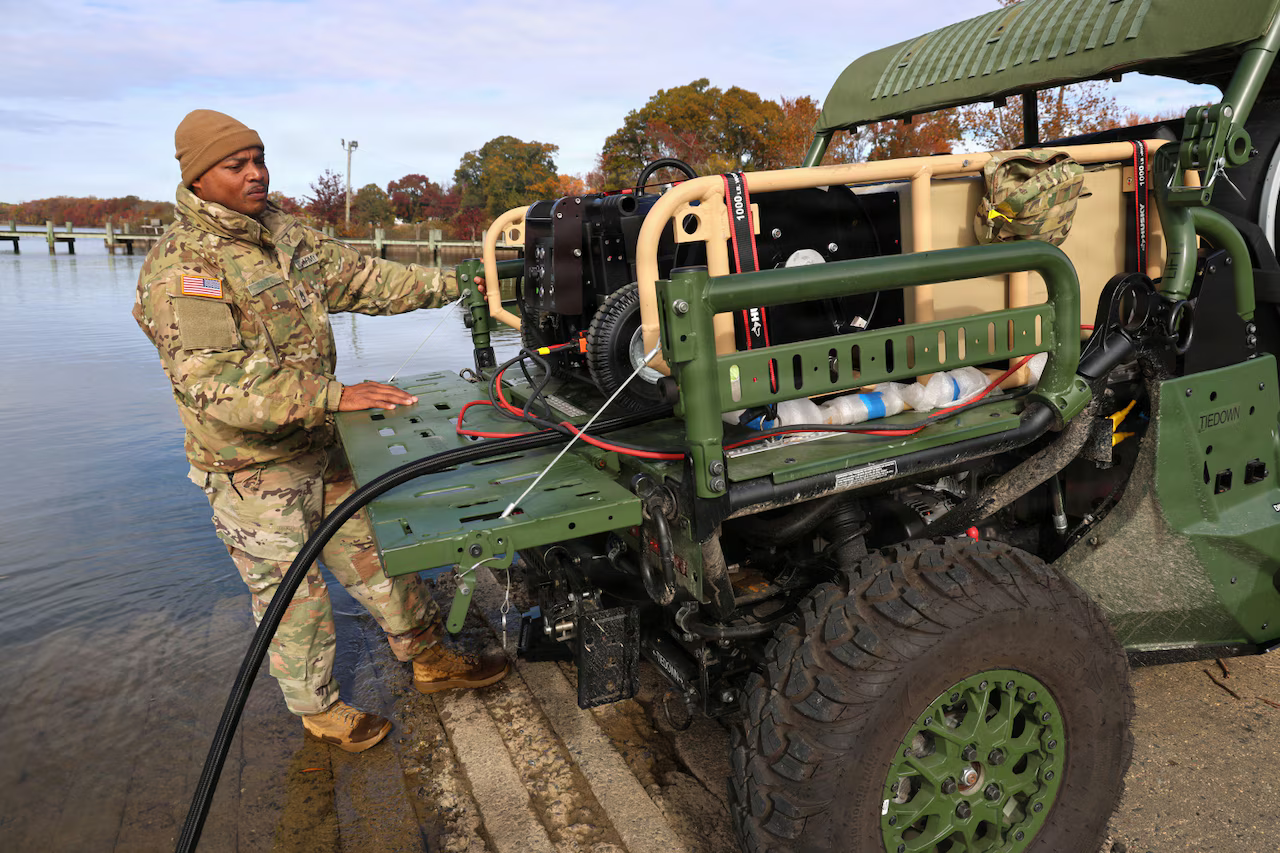
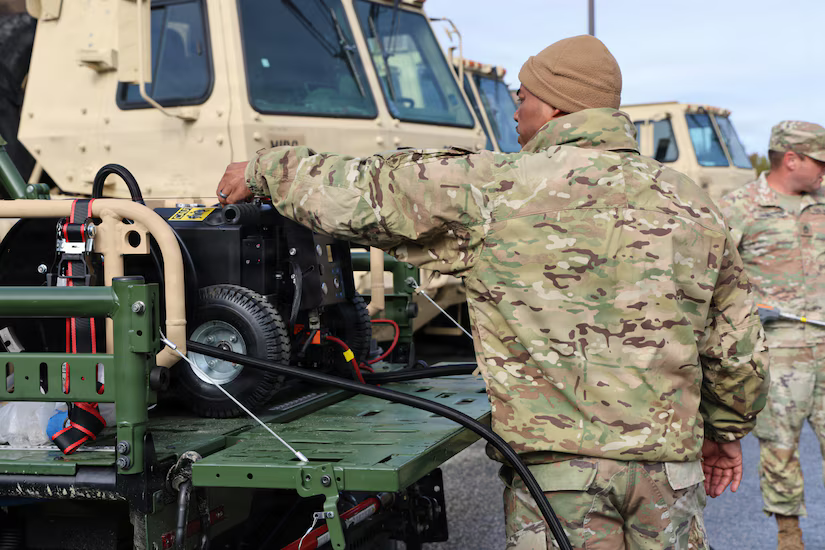
It is designed to have a much smaller logistical footprint than current spray systems. The system integrates into the bed of their host vehicle, operates off battery power, contains its own storage tanks and incorporates siphon features to replenish water from any source. Built-in recirculation features also keep the decontamination solution mixed.
Three variants
The system has three variants: man portable, small variant and large variant. The man portable is a battery-powered backpack that holds 19 litres of decontamination solution, and achieved full operational capability in May 2025, nearly three years ahead of schedule.
The small variant is designed to be mounted onto the rear bed of a joint light tactical vehicle and contains one 189-litre tank. It is powered by integrating the host vehicle's battery source, a generator or shore power.
The large variant is also designed to be mounted onto the rear bed of a Joint Light Tactical Vehicle and powered the same way, but contains two 189-litre tanks.
Both the small and large variants are also expected to reach full operational capability ahead of schedule.
"All three variants provide special operations forces with an air-droppable or mobile capability that allows them to go far forward into mission territory to perform a host of decontamination operations," Burkhalter added.
Frequent interactions with the user community
Matthew McGinley, an assistant program manager assigned to the Joint Project Manager CBRN Special Operations Forces, said that engaging with end-users enabled and accelerated incremental delivery.
"The user community is more risk-tolerant," McGinley said, as quoted in the original article. "Getting a capability into their hands today is very important toward giving them the competitive advantage and eliminates the need to spend years in additional development and testing seeking a perfect solution."
Army sergeant 1st class Marchello Walters, a senior chemical noncommissioned officer assigned to the JPM CBRN SOF, said users appreciate the modularity of the system and its ease of use.
"I have a totally complete and mobile system that does it all — no need to transport fuel, generators, or water, or haul equipment on trailers, which is amazing," Walters said.
"Although the [systems] are currently being fielded only to special operations forces, the word is quickly spreading throughout the CBRN community about this new capability, and I've received a lot of feedback from some of my military counterparts and in the Chemical Corps expressing great interest in the system," he added.
All variants of the system are "decon agnostic", wrote Burkhalter, meaning they can use any decontaminant solution. They each come with two spray nozzles: a stream nozzle to blast off contamination and a fan nozzle to apply the solution.
The team behind the CPE CBRND Joint Project Manager for CBRN Special Operations Forces will begin developing a new aircraft variant in the upcoming fiscal year to decontaminate the sensitive instruments on board, Burkhalter added.