US Air Force trains to operate in CBRN environments during exercise Toxic Magnolia

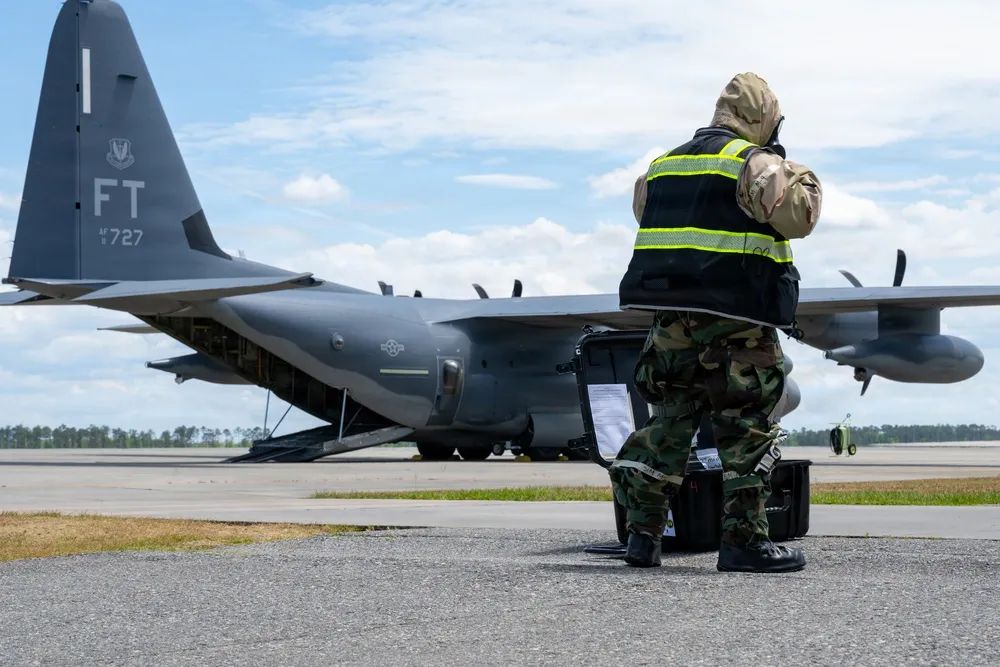
Airmen from across the US Air Force converged at Moody Air Force Base from 27 April – 1 May for exercise Toxic Magnolia, described as the service’s "premier aircrew flight equipment training event, focusing on preparing teams to operate in CBRN environments".
Toxic Magnolia is the annual exercise directed by the US Air Force headquarters that validates and employs aircrew's CBRN capabilities. Unlike previous iterations that included joint participation, this year focused on only the Air Force, "allowing teams to refine service-specific procedures and enhance readiness".
The exercise centres on the employment of the 9ALCW unit type code, the Air Force’s dedicated aircrew CBRN response capability. The exercise brought together more than 50 airmen from across the Air Force to enhance aircrew contamination control area and contamination control station capabilities.
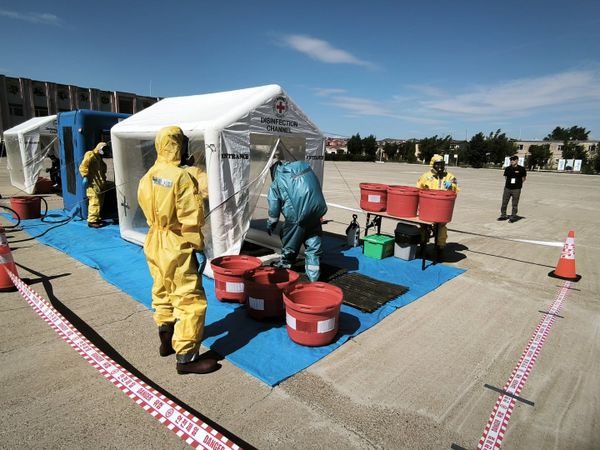
Participants rotated through complex scenarios to gain experience with both ground and aircrew CBRN equipment, including a newly fielded radiological detector. Operating in mission oriented protective posture gear, airmen navigated to unfamiliar sites, established decontamination lines and responded to simulated chemical and radiological threats.
Unexpected challenges
"The varied setups reinforced the unit’s ability to execute those capabilities in both large-scale and distributed operations," wrote DVIDS. "Training included both large-scale and mobile decontamination systems. The open-air kit allowed teams to process up to 60 aircrew members, while the smaller forward operating base decontamination kit enabled two-person teams to rapidly respond and operate in dispersed locations. Each scenario varied in threat type, scale and location, forcing teams to adapt quickly and apply standardised tactics, techniques and procedures."
Planners also introduced unexpected challenges into each scenario, ranging from language barriers with simulated coalition partners to medical emergencies and varying aircraft equipment configurations.
Beyond technical proficiency, Toxic Magnolia is designed to build confidence and resilience in high-threat environments. Participants also rotated roles, acting both as aircrew flight equipment specialists and as aircrew members undergoing decontamination.
The 23d Wing Emergency Management Flight and 23d Medical Group Bioenvironmental Engineering Flight provided technical expertise and detection capabilities, supported by the 347th Rescue Group Intel Flight who provided intelligence briefings outlining allied and adversary ACBRN capabilities.