US Army to advance autonomous chemical, biological decon capabilities

The US Army is advancing its chemical and biological weapons clean-up capabilities by developing a new autonomous decontamination system (ADS). This is according to an Army request for information due by 20 February.
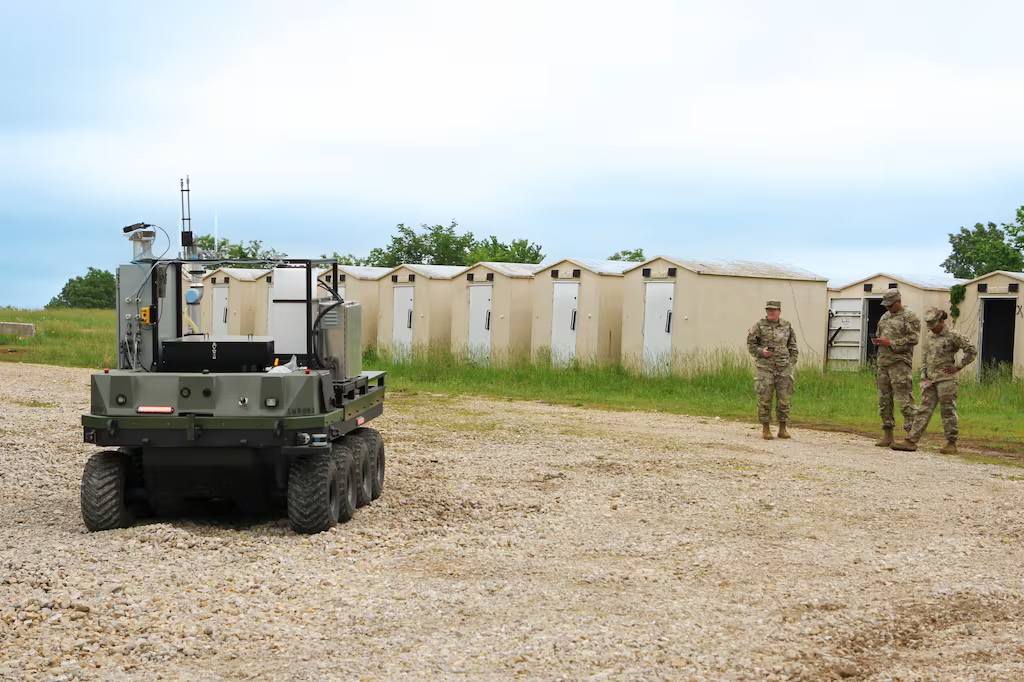
The approach aims to use autonomous airborne drones and ground robots for decontaminating vehicles, critical infrastructure and key terrain in the event of a chemical or biological weapons attack, enhancing troop safety and alleviating the burden on chemical warfare units that may not be available when needed.
"The goal of the ADS is to allow squad-sized elements to provide a platoon-sized decontamination capability for critical mission equipment," the request for information said. "Contamination mitigation operations are extremely resource-intensive in terms of time, logistics and personnel. The ADS will reduce manpower and optimise resources required for decontamination operations while mitigating the risk of exposure of warfighters to chemical and biological warfare agents through robotic means."
The Army’s Joint Project Manager for Chemical, Biological, Radiological and Nuclear Protection - known as JCM CBRN P - is seeking mobile decontamination systems, including both tethered and untethered robots, which can be transported by light or medium tactical vehicles.
These robots will fulfil essential functions such as pre-washing contaminated equipment, mapping contamination footprints, applying decontamination agents with precision and conducting post-decontamination assessments using existing detection technology.
Vendors who believe that their system meets the requirements are requested to submit a summary of no more than 10 pages detailing their product's capabilities and specifications, including navigation capabilities such as GPS, visual simultaneous localisation and mapping, levels of autonomy and decontamination components.
The ADS robots must be compatible with various decontaminants, such as liquids and foams, which include high test hypochlorite and joint general-purpose decontaminant for hardened military equipment.
The US government requests that responses be submitted electronically to john.m.sullivan188.civ@army.mil and veronica.a.stclaire.civ@army.mil.
In tandem with the ADS initiative, the request for information notes that the Army is also upgrading the CBRN specifications of the Stryker armoured vehicle, with the "Nuclear, Biological and Chemical Reconnaissance Vehicle Sensor Suite Upgrade" aiming to integrate onboard drones for contaminate scouting.