Uzbekistan, European Union conclude three-day CBRN exercise


Uzbekistan and the European Union have concluded a three-day exercise in the city of Samarkand to build response capacity to CBRN incidents during major events. The exercise was carried out in cooperation with the government of Uzbekistan via the EU CBRN Risk Mitigation Centres of Excellence.
According to information published by the EU, the exercise simulated a chemical and radiological attack on a mass gathering at Samarkand’s Dynamo football stadium. Teams had to detect and neutralise hazardous materials, secure the perimeter, apprehend suspects, decontaminate casualties, coordinate evacuation and counter a surge of media and misinformation.
Everything was organised in close cooperation with the Committee for Industrial, Radiation and Nuclear Safety and the National Guard of Uzbekistan.
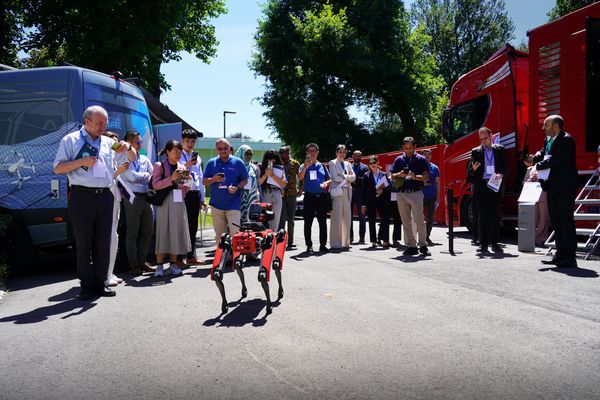
Planning for exercise Dinamo took one year. During the three-day training, agencies first aligned procedures through a tabletop exercise and drill, before conducting the full field exercise at Dynamo Stadium on 29 April, with first responders, decontamination teams, bomb disposal specialists, medical personnel, and public communication teams working side by side.
On the final day, a debriefing was held in parallel with a regional workshop for national focal points across the EU CBRN Risk Mitigation Centres of Excellence network to review lessons learned and formulate recommendations.
"Being part of the CBRN CoE network makes a real difference on the ground," said Abduvakkos Rafikov, head of the Committee for Industrial, Radiation and Nuclear Safety and head of the Regional Secretariat for Central Asia. "Our responders are better trained, and better connected to their counterparts across agencies. Exercise Dinamo showed us how far we have come, and where we can still go."
Meanwhile, EU Ambassador to Uzbekistan, Toivo Klaar, said that exercise Dinamo was "a prime example of practical cooperation following the first EU-Central Asia summit one year ago, where security and resilience were key priorities".
"By combining expertise, resources and rapid-response strategies, we are turning commitments into action and strengthening defences against CBRN risks. Cooperation today prevents crises tomorrow," he added.