Korea develops coating that removes radioactive material in three hours

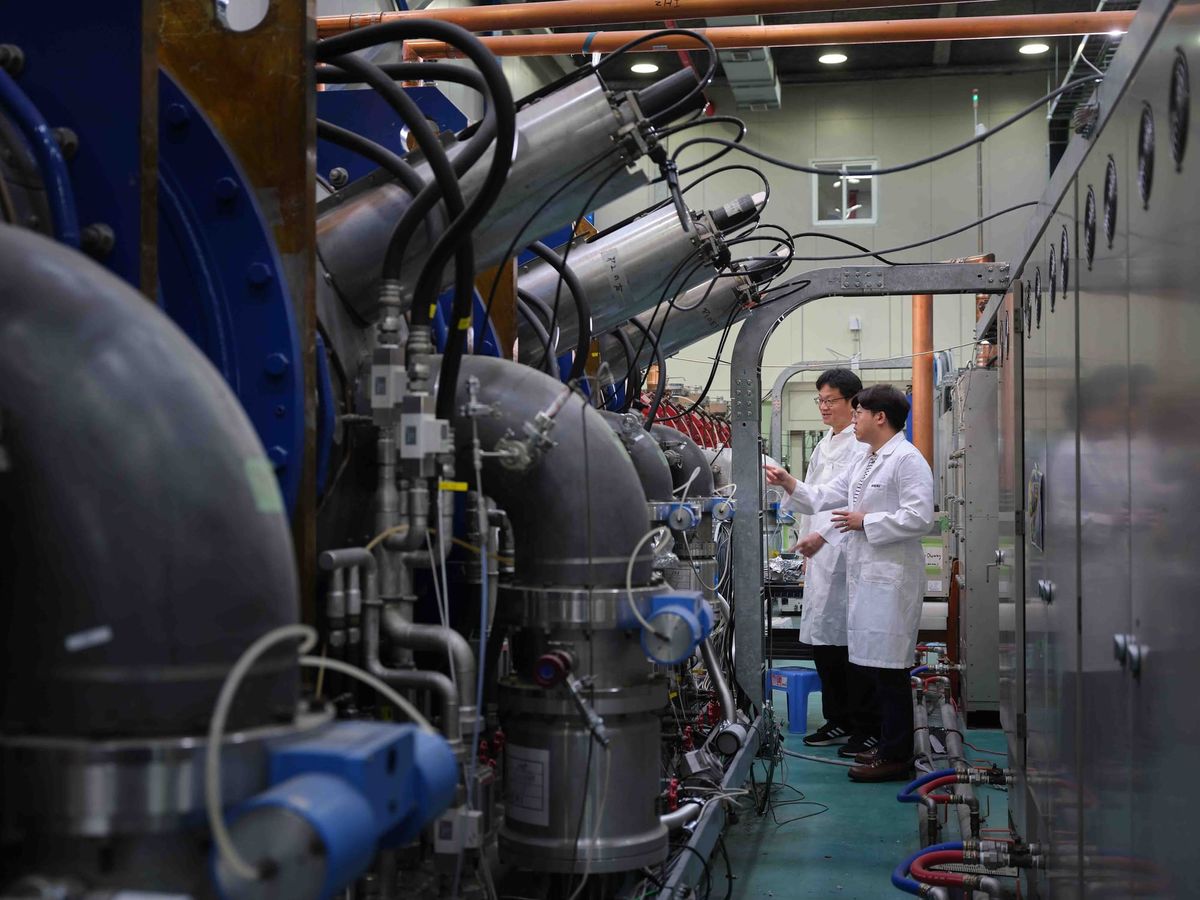
A new coating technology developed by the Korea Atomic Energy Research Institute has reduced the decontamination time of radioactive nuclides adsorbed on the surfaces of buildings and equipment.
The new technology can remove up to 95 percent of radioactive elements in three hours, while existing commercial products require approximately 24 hours to decontaminate surfaces.
The team from the Korea Atomic Energy Research Institute was led by principal researcher Yang Hee-man, in collaboration with a team led by professor Lee Dong-wook of the Ulsan National Institute of Science and Technology.
"Catechol, a chemical derived from the adhesive proteins of mussels, adheres strongly to various surfaces," according to Byeongku Lee of DongA Science. "The research team developed the high-performance decontamination coating by attaching catechol to the ends of polyurethane polymer chains. The principle is that the strong adhesion of catechol and the internal cohesion of the coating effectively captures contaminant particles."
Experiments showed that the removal efficiency of radioactive caesium ions adsorbed on a stainless steel surface was approximately 94.9 percent, higher than the 93.8 percent efficiency of commercial products. However, the new technology required only three hours instead of the usual 24 hours, significantly improving work efficiency.
Potential for treating and recycling coating waste
On cement surfaces, which are difficult to decontaminate due to their high porosity, the removal efficiency was 13.1 percent, compared to the 8.4 percent removal efficiency of commercial coatings. This result was achieved after repeating the process of coating application, one hour of drying, and peeling twice.
"The coating waste can also be re-dissolved in an acetone solvent, suggesting the possibility of reducing waste by separating radioactive contaminants and recycling the material," wrote Lee.
Principal researcher Yang stated: "This is significant in that it demonstrates faster decontamination speed, higher removal efficiency and even the potential for treating and recycling coating waste compared to existing decontamination coatings.
"We expect it to be variously utilised in nuclear safety fields such as nuclear power plant decommissioning and response to radiological accidents in the future."
Nuclear facilities that handle radioactive materials require technology to quickly remove radioactive nuclides from building and equipment surfaces. Conventional methods like chemical cleaning and high-pressure washing cause contaminant spread and generate large amounts of contaminated water.
Decontamination coatings are a noteworthy method because they can be applied to a contaminated surface, dried to form a coating layer and then peeled off like tape to quickly remove radioactive substances.