Syria to lead international task force to destroy country's chemical weapons

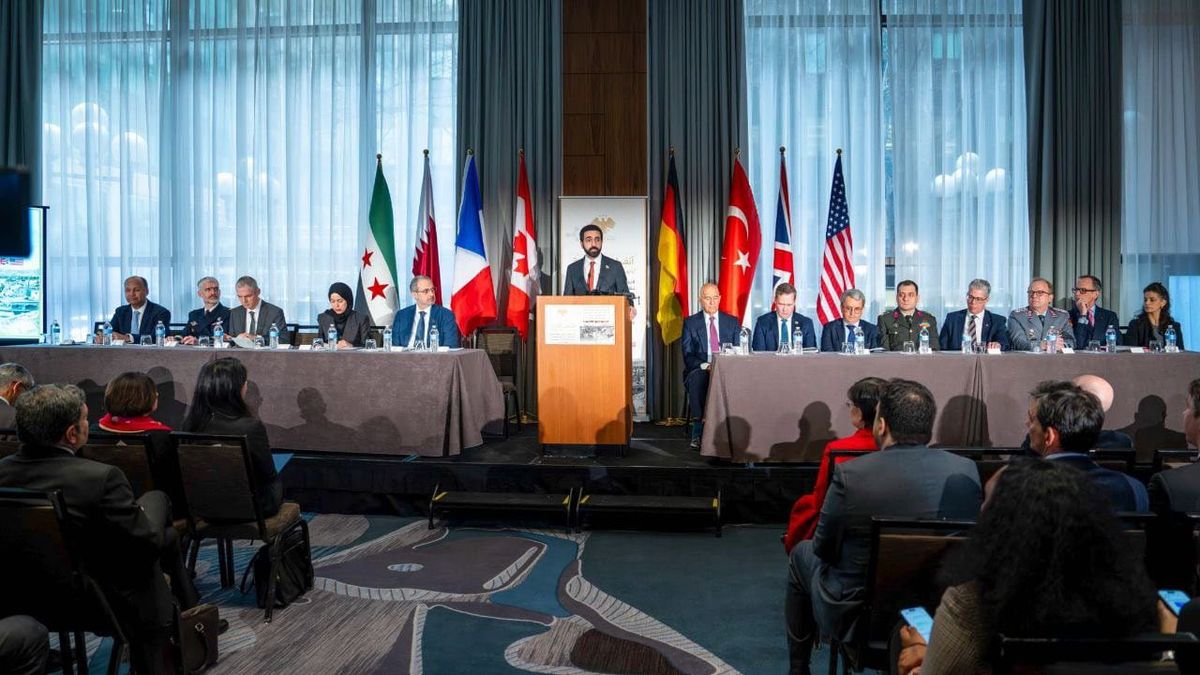
A group of western and Middle Eastern nations have announced a Syrian-led task force to identify and destroy the remnants of the country's chemical weapons programme inherited from the ousted regime of Bashar Al Assad.
During a special ceremony at the United Nations in New York on Wednesday 18 March, Syria’s permanent representative to the Organisation for the Prohibition of Chemical Weapons, ambassador Mohamad Katoub, who survived the infamous the chemical attack on Ghouta in August 2013, announced that Canada, France, Germany, Qatar, Syria, Türkiye, the UK and the US said they would stand "side-by-side" with Damascus through the newly formed "Breath of Freedom Task Force".
Announcing the statement in a post on LinkedIn, ambassador Katoub wrote that the "inauguration of the Breath of Freedom Task Force marks the result of months of intensive coordination among experts from member states of the task force".
"What began months ago with a few phone calls evolved into a structured partnership and concrete action plans. Experts from member states engaged closely with Syrian national teams, bilaterally and collectively, online and in person, laying the foundation for a meaningful and results driven collaboration," he said, adding that he was honoured to deliver the joint statement on behalf of the Syrian led Breath of Freedom Task Force.
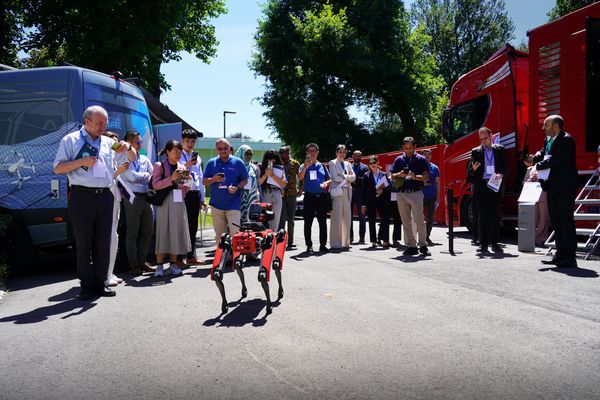
The task force will also work to build Syria’s domestic capacity to carry out the task through the provision of training, equipment and operational support, while coordinating closely with the Organisation for the Prohibition of Chemical Weapons’ verification efforts, according to Arab News.
"We will continue to support OPCW verification of the Syrian-led chemical weapons destruction, in compliance with the Chemical Weapons Convention alongside the OPCW’s continuing and urgent task to identify the perpetrators of the Assad era chemical weapons attacks," Katoub concluded in his post.
Explosive remnants blocking access to chemical weapons sites
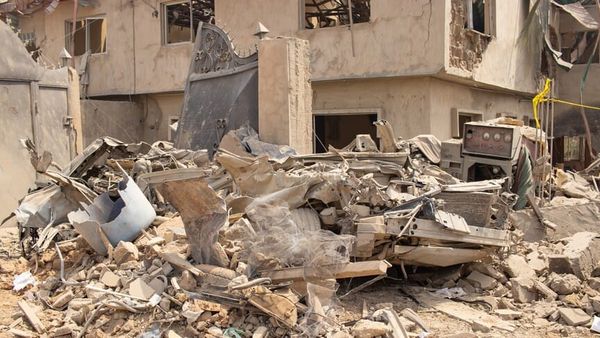
During a briefing of the UN Security Council last week, HALO's regional director for the Middle East and North Africa, Andrew Moore, outlined how contamination from conventional weapons is severely blocking access for UN and Syrian government inspectors to suspected chemical weapons sites.
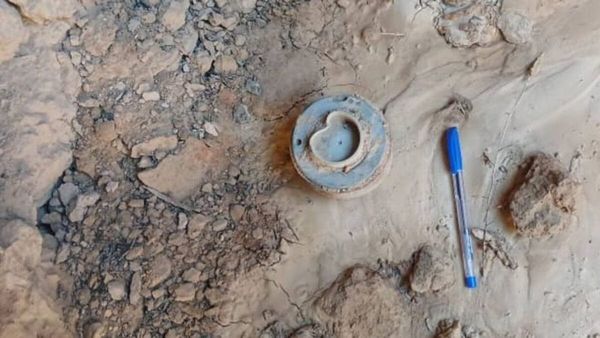
"Clearance of landmines and unexploded ordnance is an essential first step to enable safe and secure inspections by the Organisation for the Prohibition of Chemical Weapons," said Moore.
"Many suspected chemical weapons sites heavily damaged by aerial bombardment may contain perimeter or internal minefields, unexploded air-dropped or guided munitions, booby traps or improvised explosive devices, many requiring armoured mechanical assets to remove them. The good news is that it is a practical problem that can be solved quickly and safely with the right expertise and funding."
During the 13-year civil war in Syria from March 2011 to December 2024, the now deposed regime led by Bashar Al Assad was accused of the majority of chemical weapons attacks, prompting international condemnation and military responses.
The Ghouta attack in August 2013 - the deadliest use of chemical weapons in the conflict and the worst since the Iran–Iraq War - prompted an international agreement to eliminate Syria's chemical weapons and dismantle its arsenal. Although most declared stockpiles were destroyed, several lethal chemical attacks followed in subsequent years raising concerns about undeclared stockpiles.