WHO strengthens capacity to deal with mass-casualty CBRN event in Iran

The World Health Organization (WHO) is strengthening their capacity to respond to a possible mass-casualty CBRN event due to the war in Iran.
The United Nations health agency's first situation report on the escalation of conflict in the Middle East issued on 11 March notes that the potential for attacks on nuclear facilities and oil fields cause "legitimate concerns" about radiological, nuclear and environmental contamination risk, and requires "specialised public health surveillance and preparedness capacity that exceeds existing national capabilities".
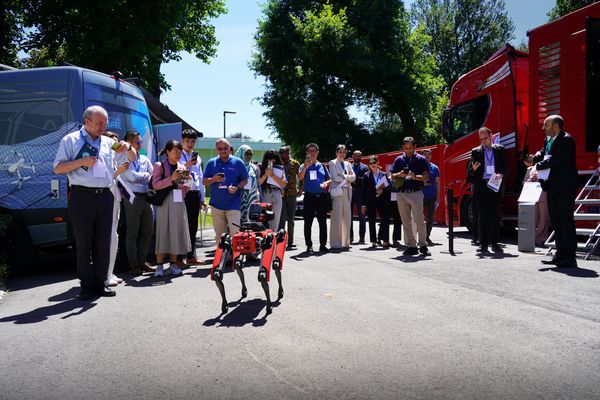
The report noted that 205 participants from WHO country offices across the region were having refresher training on staff protection and radio-nuclear emergencies. Furthermore, 1681 participants from several countries in the region took part in online radiological and nuclear staff self-protection training.
"Additional radiological preparedness training sessions are planned for Kuwait, Bahrain and Saudi Arabia," the report added.
WHO staff are also being updated on public health messaging to the civilian populations in the Gulf states, as well as personal protection measures in case of a "radiological or nuclear release", the situation report says.
Meanwhile, Kuwait’s poison control centre is "ready to respond to chemical exposure incidents". Environmental and preventive measures are currently being intensified, including monitoring radiation levels in seawater, drinking water and air particles by 13 radiological monitoring stations coordinated with relevant local authorities.
A briefing on CBRN preparedness for UN agencies in Bahrain and Kuwait has also been conducted.
Risk of radiological or nuclear incident
There are growing concerns that a civilian nuclear power facility or uranium enrichment site inside Iran could be hit amidst US and Israeli strikes on the country.
On 3 March, the International Atomic Energy Agency confirmed that buildings at the Natanz uranium enrichment site in Iran had been damaged by US-Israeli strikes, while there was also damage at a facility in Isfahan. However, the IAEA reported no elevation of radiation levels in Iran and neighbouring countries, and there was no indication that any nuclear reactor had been hit.
"There has been confirmed damage at the entrance of the nuclear fuel facility at Natanz and reported damage at gamma irradiator facility in Isfahan, but no radiological impact has been reported," the IAEA wrote.